Imagine typing a little snippet of text on a web site to prove you're a human and not a computer (something most of us have to do from time to time when we register for various web sites), and actually participating in the digitization of books! Dr. Luis von Ahn, an assistant professor at Carnegie-Mellon University, appropriately received a MacArthur "genius" grant for coming up with this.
When I went to his website to get his e-mail address and contact him, I had to type in a bit of the text in question, thereby participating in the project. After I have a chance to interview him, I'll post the story here.
Thursday, May 24, 2007


Wednesday, May 23, 2007
Barbara Mujica at the National Press Club
 It was such a pleasure to hear Barbara Mujica (center) read from her new novel Sister Teresa -- about 16th century mystic Teresa of Ávila -- at the National Press Club on Monday night! Dozens of journalists packed into the Eric Friedheim National Journalism Library for the reading and a lively Q&A. At the left is host Katie King, a journalist with a long career in Spain and elsewhere in Latin America. Photograph by Darlene Shields.
The ambitious imagination
Lately I've heard some authors associating literary ambition with ego, and lower expectations with modesty. Yet it is the big ideas, the brave ones, that have the power to inspire others and really do some literary good in the world. There's nothing particularly noble about thinking small rather than big when it comes to books, but this mild bias toward the little-idea-in-the-corner persists. "Oh," an author will say (with a hint of pride), "it's just a small thing I've been working on. I don't care at all about money or the bestseller lists."
Ah fine for you, oh independently employed one, but what about your editor? She or he has a job that relies on your book being successful, reaching as wide an audience as possible, and earning money. Did it ever occur to you while you disclaimed any interest in something as common as cash that your editor's book choices must be profitable in order for that person to keep his or her job? Publishers cut editors every year, and not just for losses. Editors can be shown the door even if their books earn modest profits! Why? Because modest profits cannot sustain a thriving publishing house with its many bills, salaries, and the enormous overhead incurred by other books that didn't make any money at all (we'll talk about the monetary realities of dissertation-based monographs later). Prestige is wonderful, but book sales keep things running.
Of course, keeping your editor afloat and working isn't the only reason to write an ambitious book. There's another, greater good in reach: writing a more ambitious book is quite a service to others. We authors serve readers. We serve booksellers. We serve editors and agents. We serve the literary world. I construct this job as a life of service, and I enjoy working with other authors who envision their contributions in a similar way. Far from a monument to ego, a good, ambitious, and well-crafted book is quite the opposite... it is the result of selflessness that seeks to feed its readers far more than to promote its author.
I'm not one for quoting (or mis-quoting) those pithy and occasionally annoying writing maxims, such as the Dr. Johnson tidbit about fools, writing and money (yes, I know the quote, but I'm loathe to repeat it again here), or many of the aphorisms attributed to Hemingway about the word and the almighty dollar, but there's one often attributed to Pushkin (it probably isn't his) that says "Write for love, but publish for money." Publishing is a very public act that gets so many other players involved, you positively owe it to them to aim for something that is (1) necessary or even essential now; (2) well thought out; and (3) beautifully crafted.
Not all books make the mark, and I by no means confuse commercial success with scholarly or literary value. But it can be quite generous for authors to think of their books as more than just the musings and scratchings of individual minds working alone. Published books are by their nature collaborative, involving editors, publicists, booksellers, readers, students and more. As the leader of this shaggy pack, the author is in a unique position to serve all of them by creating something that sustains itself in a crowded marketplace for many years to come.
Ah fine for you, oh independently employed one, but what about your editor? She or he has a job that relies on your book being successful, reaching as wide an audience as possible, and earning money. Did it ever occur to you while you disclaimed any interest in something as common as cash that your editor's book choices must be profitable in order for that person to keep his or her job? Publishers cut editors every year, and not just for losses. Editors can be shown the door even if their books earn modest profits! Why? Because modest profits cannot sustain a thriving publishing house with its many bills, salaries, and the enormous overhead incurred by other books that didn't make any money at all (we'll talk about the monetary realities of dissertation-based monographs later). Prestige is wonderful, but book sales keep things running.
Of course, keeping your editor afloat and working isn't the only reason to write an ambitious book. There's another, greater good in reach: writing a more ambitious book is quite a service to others. We authors serve readers. We serve booksellers. We serve editors and agents. We serve the literary world. I construct this job as a life of service, and I enjoy working with other authors who envision their contributions in a similar way. Far from a monument to ego, a good, ambitious, and well-crafted book is quite the opposite... it is the result of selflessness that seeks to feed its readers far more than to promote its author.
I'm not one for quoting (or mis-quoting) those pithy and occasionally annoying writing maxims, such as the Dr. Johnson tidbit about fools, writing and money (yes, I know the quote, but I'm loathe to repeat it again here), or many of the aphorisms attributed to Hemingway about the word and the almighty dollar, but there's one often attributed to Pushkin (it probably isn't his) that says "Write for love, but publish for money." Publishing is a very public act that gets so many other players involved, you positively owe it to them to aim for something that is (1) necessary or even essential now; (2) well thought out; and (3) beautifully crafted.
Not all books make the mark, and I by no means confuse commercial success with scholarly or literary value. But it can be quite generous for authors to think of their books as more than just the musings and scratchings of individual minds working alone. Published books are by their nature collaborative, involving editors, publicists, booksellers, readers, students and more. As the leader of this shaggy pack, the author is in a unique position to serve all of them by creating something that sustains itself in a crowded marketplace for many years to come.
Monday, May 14, 2007
Upcoming Blog Posts
The loss of the Gotham Book Mart, and a question: since the contents sold for a measly $400,000, where were the literary minded investors who could have stopped this?
David Damrosch's Chronicle article on whether academics can write.
The tragic death of a bookseller in Baghdad.
An idea I wish I'd thought of: brokering literary archives.
David Damrosch's Chronicle article on whether academics can write.
The tragic death of a bookseller in Baghdad.
An idea I wish I'd thought of: brokering literary archives.
PLUS, Book Lab needs ghost writers! See the right-hand column.
Sunday, May 06, 2007
Can you write a book with the goal of winning a prize?
Journalism's critics have a name for those long, usually politically correct features or series that newspapers tend run from time to time. You know the ones I mean: "Enrique's Journey," the story of a Honduran boy's search for his mother (Los Angeles Times); "Boss Hog," about hog farm pollution in North Carolina (the News and Observer); or "A Nation Challenged" about the aftermath of 9/11 (New York Times). Periodically papers take these on, with varying success , often crossing the line from hard news to a kind of literary nonfiction. Critics call them "Pulitzer Bait," since only pieces that broad, ambitious and (in their way) artistic have solid chances of becoming finalists for the prize.
Yet recently when I suggested to an author who had won the Pulitzer for one book and been nominated for another that there had been any strategy in her accomplishments, she balked. "Absolutely not!" she said. "You can't write a book to win a prize!"
Why on earth not? Journalists don't mind admitting that they sometimes write to win. Many are comfortable discussing the professional benefits of a Pulitzer, and the rewards both individually and for the host newspaper. Yet I have encountered resistance among otherwise ambitious academic authors to the idea that they would ever write with public rewards in mind.
In this office we do think about Pulitzers, National Book Awards, even Nobels. Part of my mission is an effort to quantify what has made books successful in the past, and what might signal great success in the future. Upcoming blog entries will analyze all sorts of winners, and will also examine academic bestsellers and how they got there. Why? Because I believe that just like the olympics, authors CAN run for prizes, not as a crass or compromising ends in themselves, but as the logical outcome of meaningful and ambitious careers.
Yet recently when I suggested to an author who had won the Pulitzer for one book and been nominated for another that there had been any strategy in her accomplishments, she balked. "Absolutely not!" she said. "You can't write a book to win a prize!"
Why on earth not? Journalists don't mind admitting that they sometimes write to win. Many are comfortable discussing the professional benefits of a Pulitzer, and the rewards both individually and for the host newspaper. Yet I have encountered resistance among otherwise ambitious academic authors to the idea that they would ever write with public rewards in mind.
In this office we do think about Pulitzers, National Book Awards, even Nobels. Part of my mission is an effort to quantify what has made books successful in the past, and what might signal great success in the future. Upcoming blog entries will analyze all sorts of winners, and will also examine academic bestsellers and how they got there. Why? Because I believe that just like the olympics, authors CAN run for prizes, not as a crass or compromising ends in themselves, but as the logical outcome of meaningful and ambitious careers.
Wednesday, April 11, 2007
Publication Anxiety and the Looming Book Deadline
I've been thinking about literary anxiety lately, especially as it relates to academic books. This isn't old-fashioned writer's block of the "I know I should write but I can't make myself do it" variety. Few of our authors have that. Rather, it is something more common among high achievers: the professor with the contract in hand and who has already done an enormous amount of work on The Book, and perhaps who writes every day, but who just can't seem to finish. Some authors become wrapped up in department service, teaching, and campus politics, while putting off publication of a book that could really advance their careers to the next level and result (if all goes well) in promotion, pay increases, full professor rank, and the biggest "p" of all, power (especially the power to control one's own time, and write more books).
Here are some common reasons I hear for not finishing a contracted book. For the sake of discussion, "not finishing" means any contract that has gone unfulfilled six months or more past its original due date:
(1) REASON: Even though you know you should wrap the book up, you keep postponing, researching more, re-writing, and asking for one extension after another. Meanwhile, teaching has always felt rewarding to you, and you love the extra money, so you sign up to teach summer school again, all sessions. REBUTTAL. Of course you love teaching. Most of us do, which is part of why we chose this life, and the positive reinforcement of successful teaching can feel great when you're down about your unfinished book. But the only way to get to teach all the students you want for as long as you want is to finish your book and secure your job, and that may mean taking the summer off, just this once. That's one of the many fine things this office is for. Come talk to me. We'll figure it out over coffee. No matter what's slowing you down (or shying you away), we can work around it, and we'll offer you accountability and structure. We have accomplished this by matching faculty members up with peer/mentors in other departments (very helpful when you need to check in with someone and show progress), outsourcing some of the editing work (especially endnote checking, copyediting, indexing and other repetitive, quantifiable work best handled by a competent, non-Georgetown professional), and establishing deadlines.
(2) REASON: Your editor left, and the new editor isn't interested in your book. It is way overdue, but nobody seems to care. You've been puttering along for two years without much in the way of feedback or encouragement, and you're thinking of shopping for a new publisher even though your book is 2/3 done. REBUTTAL. This happens all the time in publishing, and the books affected by it are known as orphans. It's a bummer, but you can fix this. After all, most publishers would rather go ahead with acquired books than cut them loose. My suggestion is to visit the new editor in person (authors hardly ever travel to their university presses, but the rewards are great if you do, and editors encourage it) and if s/he is amenable, even go out to lunch. Reach out! The only reason this editor is ignoring you is because there's no sense of ownership at the moment. But if you forge a personal relationship, that can all change. Another trick, especially if travel just isn't an option because of money or time, is to talk with me and we'll invite the editor to Georgetown to talk about book publishing. There is always an audience available for a chat like this, the editors love it, our professors learn a lot about how different presses and editors think, plus you get the chance to befriend your new editor and turn him or her from reluctant shepherd to enthusiastic publishing partner.
(3) REASON: You didn't get that summer fellowship to Japan to work in the archives, and you need that work to finish. REBUTTAL: I looked at your fellowship terms, and they were only offering you $2,000 plus housing. Big whoop. Get on the internet, find a professor at the Japanese university where you were going to study who wants to spend a summer in Washington, and house swap! You'll be amazed how many people will jump at the opportunity for free housing near DC with our Library of Congress and wonderful, specialized archives. Surely in all of Japan (or England, or Denmark, or Australia, or wherever) there is a prof there with a livable space who wants to trade for yours for three months. You don't need to give someone your whole house, just a room of it and preferably a few meals a week, and someone there will surely want to offer the same. Lifelong friendships have grown out of these arrangements, and even if your guest isn't ideal, it's only for a short period of time.
Once housing is taken care of, the $2k they were going to pay for travel seems a bit more manageable. First ask your department for it. I'm serious. All departments don't have zillions to throw around, but they might find some money earmarked for books if you already have your housing set up, and at this point we're only talking about plane fare, and modest living expenses. Even if they only find $300-$500, that's a start. Put it on a credit card if you have to. Then get your butt over there, live on noodles, fresh air and the thrill of research (you did it as a grad student, you can do it again now), and resolve to finish the book in the remaining weeks or few months when you get back.* Yes, yes, I know you have (kids, spouse, elderly parents in need of care, fill-in-the-blank), but we are talking about three months dedicated to your career... three important months that can change everything if you get your book finished, and that will free you up to be a better parent, partner, child, etc. in the future. You can dedicate the next six months to making it up to all the people who love you -- and I'll argue that if they really love you, they'll help you get the time and travel you need for that research.
Georgetown as an institution does care about you and your book, and this office is a visible manifestation of that. So use it. And the next time you find yourself with publication anxiety, remind yourself that the majority of your peers have suffered with it, too. Books get published anyway, and we have many and creative resources for helping that happen.
*What do I mean by finishing a book in weeks or months? That will be the subject of a future post: "Does it really have to take years to finish a book?"
Here are some common reasons I hear for not finishing a contracted book. For the sake of discussion, "not finishing" means any contract that has gone unfulfilled six months or more past its original due date:
(1) REASON: Even though you know you should wrap the book up, you keep postponing, researching more, re-writing, and asking for one extension after another. Meanwhile, teaching has always felt rewarding to you, and you love the extra money, so you sign up to teach summer school again, all sessions. REBUTTAL. Of course you love teaching. Most of us do, which is part of why we chose this life, and the positive reinforcement of successful teaching can feel great when you're down about your unfinished book. But the only way to get to teach all the students you want for as long as you want is to finish your book and secure your job, and that may mean taking the summer off, just this once. That's one of the many fine things this office is for. Come talk to me. We'll figure it out over coffee. No matter what's slowing you down (or shying you away), we can work around it, and we'll offer you accountability and structure. We have accomplished this by matching faculty members up with peer/mentors in other departments (very helpful when you need to check in with someone and show progress), outsourcing some of the editing work (especially endnote checking, copyediting, indexing and other repetitive, quantifiable work best handled by a competent, non-Georgetown professional), and establishing deadlines.
(2) REASON: Your editor left, and the new editor isn't interested in your book. It is way overdue, but nobody seems to care. You've been puttering along for two years without much in the way of feedback or encouragement, and you're thinking of shopping for a new publisher even though your book is 2/3 done. REBUTTAL. This happens all the time in publishing, and the books affected by it are known as orphans. It's a bummer, but you can fix this. After all, most publishers would rather go ahead with acquired books than cut them loose. My suggestion is to visit the new editor in person (authors hardly ever travel to their university presses, but the rewards are great if you do, and editors encourage it) and if s/he is amenable, even go out to lunch. Reach out! The only reason this editor is ignoring you is because there's no sense of ownership at the moment. But if you forge a personal relationship, that can all change. Another trick, especially if travel just isn't an option because of money or time, is to talk with me and we'll invite the editor to Georgetown to talk about book publishing. There is always an audience available for a chat like this, the editors love it, our professors learn a lot about how different presses and editors think, plus you get the chance to befriend your new editor and turn him or her from reluctant shepherd to enthusiastic publishing partner.
(3) REASON: You didn't get that summer fellowship to Japan to work in the archives, and you need that work to finish. REBUTTAL: I looked at your fellowship terms, and they were only offering you $2,000 plus housing. Big whoop. Get on the internet, find a professor at the Japanese university where you were going to study who wants to spend a summer in Washington, and house swap! You'll be amazed how many people will jump at the opportunity for free housing near DC with our Library of Congress and wonderful, specialized archives. Surely in all of Japan (or England, or Denmark, or Australia, or wherever) there is a prof there with a livable space who wants to trade for yours for three months. You don't need to give someone your whole house, just a room of it and preferably a few meals a week, and someone there will surely want to offer the same. Lifelong friendships have grown out of these arrangements, and even if your guest isn't ideal, it's only for a short period of time.
Once housing is taken care of, the $2k they were going to pay for travel seems a bit more manageable. First ask your department for it. I'm serious. All departments don't have zillions to throw around, but they might find some money earmarked for books if you already have your housing set up, and at this point we're only talking about plane fare, and modest living expenses. Even if they only find $300-$500, that's a start. Put it on a credit card if you have to. Then get your butt over there, live on noodles, fresh air and the thrill of research (you did it as a grad student, you can do it again now), and resolve to finish the book in the remaining weeks or few months when you get back.* Yes, yes, I know you have (kids, spouse, elderly parents in need of care, fill-in-the-blank), but we are talking about three months dedicated to your career... three important months that can change everything if you get your book finished, and that will free you up to be a better parent, partner, child, etc. in the future. You can dedicate the next six months to making it up to all the people who love you -- and I'll argue that if they really love you, they'll help you get the time and travel you need for that research.
Georgetown as an institution does care about you and your book, and this office is a visible manifestation of that. So use it. And the next time you find yourself with publication anxiety, remind yourself that the majority of your peers have suffered with it, too. Books get published anyway, and we have many and creative resources for helping that happen.
*What do I mean by finishing a book in weeks or months? That will be the subject of a future post: "Does it really have to take years to finish a book?"
Thursday, April 05, 2007
What kind of academic books win the Pulitzer Prize?
 The results of the meeting sponsored by the Government Department are well worth considering here. We looked at the past decade and a half of Pulitzer results for nonfiction, and found some interesting consistencies. When focusing exclusively on university presses, the prize distribution followed a pattern. In future blog posts I'll attempt to analyze this by contacting the authors and getting their thoughts on what goes into the creation of a such a book. I'll also consider the words of Martin J. Sherwin of Tufts, whose book American Prometheus about Oppenheimer won the 2006 prize with Knopf as publisher. Sherwin does not believe that one can or should write to win a prize, but he also has useful thoughts about why a given book might succeed. Since 1986, 16 books from university presses have won Pulitzers (this list does not include books from elite trade presses). The breakdown is as follows (alphabetical order):
Carnegie-Mellon University Press: 1
Harvard University Press: 2
Louisiana State University Press: 2
Oxford University Press: 7
Princeton University Press: 1
Wesleyan University Press: 2 (1 with University Press of New England)
And here are the titles, grouped by year:
1986, Poetry, The Flying Change by Henry Taylor (Louisiana State University Press)
1987, Poetry, Thomas and Beulah by Rita Dove (Carnegie-Mellon University Press)
1989, History, Battle Cry of Freedom: The Civil War Era by James M. McPherson (Oxford University Press)
1990, Biography or autobiography, Machiavelli in Hell by Sebastian de Grazia (Princeton University Press)
1991, General Nonfiction, The Ants by Bert Holldobler and Edward O. Wilson (Belknap/Harvard University Press)
1992, History, The Fate of Liberty: Abraham Lincoln and Civil Liberties by Mark E. Neely, Jr. (Oxford University Press) ; Poetry, Selected Poems by James Tate (Wesleyan University Press)
1994, Poetry, Neon Vernacular: New and Selected Poems by Yusef Komunyakaa (Wesleyan University Press/University Press of New England)
1995, Biography or autobiography, Harriet Beecher Stowe: A Life by Joan D. Hedrick (Oxford University Press)
1997, Poetry, Alive Together: New and Selected Poems by Lisel Mueller (Louisiana State University Press)
1999, History, Gotham: A History of New York City to 1898 by Edwin G. Burrows and Mike Wallace (Oxford University Press)
2000, History, Freedom From Fear: The American People in Depression and War, 1929-1945 by David M. Kennedy (Oxford University Press)
2004, History, A Nation Under Our Feet: Black Political Struggles in the Rural South from Slavery to the Great Migration by Steven Hahn (The Belknap Press of Harvard University Press)
2005, History, Washington’s Crossing by David Hackett Fischer (Oxford University Press)
2006, History, Polio: An American Story by David M. Oshinsky (Oxford University Press); Poetry, Late Wife by Claudia Emerson (Louisiana State University Press)
1987, Poetry, Thomas and Beulah by Rita Dove (Carnegie-Mellon University Press)
1989, History, Battle Cry of Freedom: The Civil War Era by James M. McPherson (Oxford University Press)
1990, Biography or autobiography, Machiavelli in Hell by Sebastian de Grazia (Princeton University Press)
1991, General Nonfiction, The Ants by Bert Holldobler and Edward O. Wilson (Belknap/Harvard University Press)
1992, History, The Fate of Liberty: Abraham Lincoln and Civil Liberties by Mark E. Neely, Jr. (Oxford University Press) ; Poetry, Selected Poems by James Tate (Wesleyan University Press)
1994, Poetry, Neon Vernacular: New and Selected Poems by Yusef Komunyakaa (Wesleyan University Press/University Press of New England)
1995, Biography or autobiography, Harriet Beecher Stowe: A Life by Joan D. Hedrick (Oxford University Press)
1997, Poetry, Alive Together: New and Selected Poems by Lisel Mueller (Louisiana State University Press)
1999, History, Gotham: A History of New York City to 1898 by Edwin G. Burrows and Mike Wallace (Oxford University Press)
2000, History, Freedom From Fear: The American People in Depression and War, 1929-1945 by David M. Kennedy (Oxford University Press)
2004, History, A Nation Under Our Feet: Black Political Struggles in the Rural South from Slavery to the Great Migration by Steven Hahn (The Belknap Press of Harvard University Press)
2005, History, Washington’s Crossing by David Hackett Fischer (Oxford University Press)
2006, History, Polio: An American Story by David M. Oshinsky (Oxford University Press); Poetry, Late Wife by Claudia Emerson (Louisiana State University Press)
Saturday, March 24, 2007
How Many Books Does a University Require for Promotion?
Does anyone ever ask you unanswerable questions? For example, "Would you have married me if I wasn't rich?" Or "How can I convince you that I'm telling the truth?" Sometimes inherent insecurity is built into the question, such as "How many people have you loved before me?" or "Does this make me look fat?" Usually nothing you say in response to these unanswerables will be fully satisfactory.
The Great Unanswerable I get all the time is "How many publications do I need for promotion at Georgetown?" Now, this is unanswerable partly because of the contraints of my job: I do not advise on promotion. True, I help people get more books and articles published, but I can't and won't speculate on what any given committee will decide when presented with the complete portfolio of a scholar going up for full professor (the #1 situation I see) or, less often, tenure. Promotion decisions involve scholarship, service, publishing, teaching, and so many other factors that it is impossible even for someone on a committee to definitively answer this question, let alone someone like me who is necessarily exempted from the process.
Still, the question nags, and it comes up so often that I was thrilled when a professor colleague gave me the perfect answer! I won't identify the professor here, because all conversations I have with faculty are confidential, but I'll simply say that s/he is very highly placed, and has been on many a rank and tenure committee. Are you ready for the answer? Will the elegant simplicity of it blind you to the fact that it took years of experience for this person to arrive at it?
Here's the short answer: "It depends on what the other guy has."
Any institution will hire the best-qualified people it can, so you can easily see why tormenting yourself with the one book? two books? question is futile. It not only depends on who else might want your job, but it surely also depends on what impact your book will likely have on your field (a combination of publisher, subject matter, and reception by your peers at other institutions), and how essential your book's subject matter and approach makes you as a scholar.
I have yet to meet the rank and tenure professional who will say that an arbitrary number of books and articles guarantees anything. One book from a press your colleagues respect that contributes to the field in a meaningful way will almost always trump three or even more from presses they do not respect, or on topics of less relevance. I know a professor who spent far too long on the same book, putting her job in jeopardy. But it was brilliant, she landed a magnificent publisher, and she won the Pulitzer prize. Most of her colleagues had several books by the time she hit the finish line with her one winner. Such situations are anomalous, but they point out the absurdity of trying to affix a mere number to book publishing for promotion.
This blog will examine influential books in the months to come, picking apart great successes from academic authors and asking why they worked so well. Answers are seldom definitive, but it can be ever so helpful to look at a superb book and think about what made it that way. I will also hold weekly drop-in discussion hours where we will pore over certain academic classics and consider what made them so.
Meanwhile, the next time someone asks "One book for promotion? Two?" I'll bounce the question back: "What are others doing in your field? What's going on at the top?" Read the CVs of the leaders in your discipline, including in your department, and aim for a standard far beyond the minimum. Instead of counting book spines on your shelf, look at the names of the publishers, and the influence of your books or books-to-be on your field. A far more interesting passtime than wondering "How many?" is to ponder what you plan to publish and what others are publishing in terms of quality and impact on your field.
The Great Unanswerable I get all the time is "How many publications do I need for promotion at Georgetown?" Now, this is unanswerable partly because of the contraints of my job: I do not advise on promotion. True, I help people get more books and articles published, but I can't and won't speculate on what any given committee will decide when presented with the complete portfolio of a scholar going up for full professor (the #1 situation I see) or, less often, tenure. Promotion decisions involve scholarship, service, publishing, teaching, and so many other factors that it is impossible even for someone on a committee to definitively answer this question, let alone someone like me who is necessarily exempted from the process.
Still, the question nags, and it comes up so often that I was thrilled when a professor colleague gave me the perfect answer! I won't identify the professor here, because all conversations I have with faculty are confidential, but I'll simply say that s/he is very highly placed, and has been on many a rank and tenure committee. Are you ready for the answer? Will the elegant simplicity of it blind you to the fact that it took years of experience for this person to arrive at it?
Here's the short answer: "It depends on what the other guy has."
Any institution will hire the best-qualified people it can, so you can easily see why tormenting yourself with the one book? two books? question is futile. It not only depends on who else might want your job, but it surely also depends on what impact your book will likely have on your field (a combination of publisher, subject matter, and reception by your peers at other institutions), and how essential your book's subject matter and approach makes you as a scholar.
I have yet to meet the rank and tenure professional who will say that an arbitrary number of books and articles guarantees anything. One book from a press your colleagues respect that contributes to the field in a meaningful way will almost always trump three or even more from presses they do not respect, or on topics of less relevance. I know a professor who spent far too long on the same book, putting her job in jeopardy. But it was brilliant, she landed a magnificent publisher, and she won the Pulitzer prize. Most of her colleagues had several books by the time she hit the finish line with her one winner. Such situations are anomalous, but they point out the absurdity of trying to affix a mere number to book publishing for promotion.
This blog will examine influential books in the months to come, picking apart great successes from academic authors and asking why they worked so well. Answers are seldom definitive, but it can be ever so helpful to look at a superb book and think about what made it that way. I will also hold weekly drop-in discussion hours where we will pore over certain academic classics and consider what made them so.
Meanwhile, the next time someone asks "One book for promotion? Two?" I'll bounce the question back: "What are others doing in your field? What's going on at the top?" Read the CVs of the leaders in your discipline, including in your department, and aim for a standard far beyond the minimum. Instead of counting book spines on your shelf, look at the names of the publishers, and the influence of your books or books-to-be on your field. A far more interesting passtime than wondering "How many?" is to ponder what you plan to publish and what others are publishing in terms of quality and impact on your field.
Tuesday, March 20, 2007
Cambridge at Amazon? Are the Big University Presses Acting Like the "Trades"?
 Okay, so we already knew that Oxford USA was crossing the river and doing business on the trade side of the trade press/university press divide. It became obvious last May at Book Expo America in Washington, DC, when Oxford chose to set up its booth on the trade side of the show floor, instead of with the other university presses. I asked representatives at the booth if my eyes were deceiving me, and they said pas du tout, for Oxford is indeed envisioning itself as competitive with such elite trade houses as Knopf, Norton and Scribner.
Personally, I think this is good for books, but only in a specific application, and I'd like to hear more from university press publishers about what they think is really happening here. It seems from the outside (and from talking to editors) that Oxford USA sees itself as competitive with the trades, whereas Oxford UK is still more about university press publishing. Is that accurate? Inaccurate? Anyone?
Now comes the news (or at least it's news to me) that Cambridge University Press has pitched a tent on Amazon.com, at least for its scientific, technical, and medical titles, again engaging in behavior that seems remarkably like something a trade press might do. Personally I love it, but then I always like to see university presses taking their wonderful wares to a larger world. Fresh new markets for fine scholars, blogs, online booksellers, more creative promotion = all good.
What I don't want to see (and only individual university press editors and directors can answer this, for each press is different) is academic publishing shunted aside in favor of more trade-oriented projects. Scholarly publishing is what it is for a reason. Scholarship in its most traditional form must survive, and universities must nurture it with financial support on the side of the university behind the press, and financial support from the universities whose professors hope to publish there. I began this role at Georgetown as a sharp critic of subventions, but I now support them, simply because my eyes have been opened through visits to university presses about the realities of continuing to publish important books for what is sometimes by definition a tiny market.
The good side of university presses acting like trades is that the successful trade books can support the more boutique academic projects. This goes on all the time at elite trade houses like Farrar, Straus & Giroux, where moneymaking authors like Scott Turow keep the house solvent so it can publish (for example) poets, as it has for generations even though few of the poets except the biggest names make any money. That's a fine symbiosis, and an example of how I believe a trade/specialty mix can and should work.
But if academic authors bring their purely scholarly projects and find encouragement to adapt them to a trade audience or water down the scholarship in order to serve a perceived market, then that's a problem, and one we might fruitfully debate here.
Wednesday, March 07, 2007
The director of the University of Arizona Press at Georgetown
 As part of this office's ongoing effort to bring authors and university press publishers together, we are pleased to host Dr. Christine Szuter, director of the University of Arizona Press, for a question and answer session about book publishing on March 14 at 10:30 a.m. The location will be the Book Lab townhouse (right). Dr. Szuter will answer your questions about university press publishing as it pertains to her experience at Arizona. Every press is different in vital ways, so this is your chance to get to know what makes this publisher unique.
 Possible topics include: (1) What is Arizona's editorial vision and scope, and how does it stand out from its peers? (2) How much publicity can and should the press handle, and what is the author responsible for? How can an author work with a university press publisher and also with book promotion resources here at Georgetown to increase a book's sales? (3) How does the peer review process work at Arizona? Is it a perfect system (short answer... it never is)? (4) What happens if Arizona rejects a book? Can and should the author ever try the press again? (5) What is the policy on subventions? How does Dr. Szuter feel about them, when and why does the press ask for them, and what do they mean for authors? (6) Rights! In this office I'm always suggesting that authors keep their copyright. But Dr. Szuter points out that with rights come responsibilities. Learn more about what owning your copyright means, and how you can and should exploit your reserved rights.
What: Q&A with Dr. Christine Szuter, Director of the University of Arizona Press
When: Wednesday, March 14, 10:30 a.m.
Where: Book Lab townhouse (see address at right)
All are welcome, but because of space considerations,
RSVPs are a must!
Wednesday, February 28, 2007
Do publishers want books with a moral or faith-centered message?
Several authors have expressed concern that mainstream university or trade publishers may not want a book with a moral or faith-centered message. I have had particular conversations with some members of Georgetown's Jesuit community about this, as well as with other academics who worry that such topics are only of interest to religious publishers.
In fact, quite the opposite is the case. Just read any issue of Publisher's Weekly and see the array of robust books that are written from a position of personal religious belief, or an ethical platform that is decidedly biased toward some point of moral certainty, that also emanate from presses not otherwise known for such positions. These books sell well, and many editors are open to publishing more.
Examples include God at Work: The History and Promise of the Faith at Work Movement by David W. Miller (December 2006) and Warranted Christian Belief by Alvin Plantinga (2000), both from Oxford University Press; the forthcoming Morality in a Technological World: Knowledge as Duty by Lorenzo Magnani (August 2007) and Defending Life by Francis Beckwith, both from Cambridge University Press. Or how about Faith and the Historian: Catholic Perspectives by Nick Salvatore, from the University of Illinois Press?
In fact, quite the opposite is the case. Just read any issue of Publisher's Weekly and see the array of robust books that are written from a position of personal religious belief, or an ethical platform that is decidedly biased toward some point of moral certainty, that also emanate from presses not otherwise known for such positions. These books sell well, and many editors are open to publishing more.
Examples include God at Work: The History and Promise of the Faith at Work Movement by David W. Miller (December 2006) and Warranted Christian Belief by Alvin Plantinga (2000), both from Oxford University Press; the forthcoming Morality in a Technological World: Knowledge as Duty by Lorenzo Magnani (August 2007) and Defending Life by Francis Beckwith, both from Cambridge University Press. Or how about Faith and the Historian: Catholic Perspectives by Nick Salvatore, from the University of Illinois Press?
Sunday, February 18, 2007
Why should academic authors join the National Press Club?
 The National Press Club is the nation's premier organization for journalists. But did you know it is also interested in welcoming academic authors like you as members? In fact, as a nonfiction author with books published by certain recognized presses (university presses qualify, as do the great trade houses), you may qualify for the Club's first tier of membership. Here is how the National Press Club defines Active Members: "Generally editorial members of the 'working press,' college-level journalist instructors and published non-fiction authors." In other words (if you're in the core audience for this blog), quite possibly published scholars like you.
The National Press Club is a leader in highlighting the work of important, newsmaking authors. Its annual Book Fair in November offers national exposure via C-SPAN, plus personal contact with journalists, book buyers, and literary pundits. It also enjoys substantial media coverage, including Book TV and satellite radio, which can help boost book sales and publicity. Last year’s event attracted over 1,000 visitors to meet the 70 highlighted authors. Those who have participated include: Bill Bryson, General Wesley Clark, Walter Cronkite, Senator Byron Dorgan, Bob Edwards, John Eisenhower, Francis Fukuyama, Senator Kay Bailey Hutchison, Marvin Kalb, Larry King, Jim Lehrer, George McGovern, Bill O’Reilly, E. Annie Proulx, Nora Roberts, Bob Schieffer, and Scott Simon. For mainstage book events the Club has welcomed Michael Crichton, J. K. Rowling, Chuck Palahniuk, John Irving, and Barbara Kingsolver. Georgetown University authors invited to participate in National Press Club book events or Book Fair include James J. O'Donnell, Pietra Rivoli, Maureen Corrigan, David Gewanter, and G. Ronald Murphy, S.J. Upcoming authors for 2007 include Perfect Storm author Sebastian Junger, The Secret Life of Lobsters author Trevor Corson, Frida author Barbara Mujica, Jack Valenti, Newt Gingrich, and Senator Charles Schumer.
Requirements are rigorous. Two active members must nominate you, and you need to assemble a portfolio of your published work. Then your application will be submitted to the membership committee and perhaps even the board. If you think your books and writing for the media may qualify for National Press Club membership, please write to me (as an active member, I serve on the NPC Book Committee, Book Fair Subcomittee, and I'm a producer for the XM radio program "From the National Press Club") about your potential for nomination. Even if you're not sure, it is worth having the discussion now, because the rewards of joining this dynamic and powerful organization are so great.
Saturday, February 03, 2007
Some University Presses Have Started Blogs
Here's some valuable web surfing! Many university presses have blog sites. For those of you who are interested in finding a new university press, or knowing more about the one where you hope to publish again, this is an excellent way to get a peek inside their doors without actually having to visit. (I do recommend in-person visits, but that's for another blog item.) Following is a list of the university presses I know have blogs, along with links to their sites. I'll also add this as a permanent feature on this blog so you can come back in the future and read them all in one convenient place:
University of California Press
University of Chicago Press
Cork University Press
University of Georgia Press
Harvard University Press
The MIT Press
The University of Minnesota Press
The University of Nebraska Press
Oxford University Press
The University of Pennsylvania Press
The University of Tennessee Press
Yale University Press
The good news is that they exist, they're mostly readable, and some offer a view of university presses that's a bit different from what you see in the glossy catalogues and those mind-numbing rah-rah pieces publishers love to dump on those of us who are looking for real answers. The bad news is that they're generally about THEM. Most UP blogs only talk about their own books. There is precious little about the industry as a whole. The best blog model I've seen for publishing strategies and industry news rather than a predictable rundown of the press's book list is from Cork University Press, where Publications Director Mike Collins has a number of great posts. He notes that he has a specialization in marketing, and I'm not surprised. His blog makes you want to read it and return again to read some more. He doesn't seem to be updating it anymore, but if he starts again I'll certainly want to put it on my regular list of things to read.
University of California Press
University of Chicago Press
Cork University Press
University of Georgia Press
Harvard University Press
The MIT Press
The University of Minnesota Press
The University of Nebraska Press
Oxford University Press
The University of Pennsylvania Press
The University of Tennessee Press
Yale University Press
The good news is that they exist, they're mostly readable, and some offer a view of university presses that's a bit different from what you see in the glossy catalogues and those mind-numbing rah-rah pieces publishers love to dump on those of us who are looking for real answers. The bad news is that they're generally about THEM. Most UP blogs only talk about their own books. There is precious little about the industry as a whole. The best blog model I've seen for publishing strategies and industry news rather than a predictable rundown of the press's book list is from Cork University Press, where Publications Director Mike Collins has a number of great posts. He notes that he has a specialization in marketing, and I'm not surprised. His blog makes you want to read it and return again to read some more. He doesn't seem to be updating it anymore, but if he starts again I'll certainly want to put it on my regular list of things to read.
Sunday, January 28, 2007
Murder at Princeton University Press
 A squib in Publisher's Weekly about Michael Stanislawski's A Murder in Lemberg: Politics, Religion, and Violence in Modern Jewish History led me to contact the book's editor at Princeton University Press, Brigitta van Rheinberg. She is the executive editor for history, and also a group editor in the humanities generally.
The PW article would lead one to think that a trade book, especially historical true crime, is a huge departure for a university press, but van Rheinberg begs to differ. She refers to a book like this one as "microhistory," and elaborates on why it has always been a good choice for Princeton and for other university presses: "Microhistories are the best histories, in this case especially in the scholarly Jewish community. We have for a long time now – several years – had great success with trade books. Of approximately 25 books a year, four or so are general trade or academic trade. [Princeton has enjoyed] major trade books with major sales, comparable to [literary trade houses like] Farrar, Straus & Giroux or Norton."
She is especially interested in publishing fresh, revisionist histories that examine things we think we know in a different light. She cited as an example the book Neighbors: The Destruction of the Jewish Community in Jedwabne, Poland. “[T]he book created a sensation in Poland, and sparked a national debate that led to the Polish president publicly apologizing for something that happened in World War II. The story had always been that the Nazis killed the Jews, but in this history we see that some neighbors rounded up and killed their own neighbors. Because of the book a truth commission was established . . . There were huge debates, including attention from “60 Minutes,” Time, and Newsweek, and even letters from American Polish immigrants demanding that we withdraw the book."
If you want to pitch a microhistory project to her, it might be tempting to think you can include information in your proposal demonstrating that the book will be a blockbuster. Many "how to write a proposal" (or in the case of scholarly books, prospectus) guides emphasize the market aspect, and I work with authors at Georgetown to think about such things. But van Rhineberg says she disregards most of that and focuses on the book itself, preferring a proposal that lays out the author’s intellectual agenda with a succinct and relevant statement of what he or she is trying to say. "Write a really great proposal," she counsels, "spend time on that" rather than worrying too much about marketing. If she likes the idea and agrees the author is right for it, van Rhineberg then works with the author on this pitch almost as if she was his or her agent, because she has to sell the book inside (most editors go through this process, "selling" the book to an in-house team before making an offer). By finding and publishing excellent microhistories like this one, she hopes to give discussions in the humanities ever more relevance with the educated general reading public.
Saturday, December 30, 2006
Aguecheek’s Beef, Belch’s Hiccup, and Other Gastronomic Interjections
 A new book from the University of Chicago Press demonstrates just what a remarkable range of publishing is possible with university presses. Based on a Latin/Old Danish cookbook that may be the oldest surviving manuscript of its kind, this medieval text from 1300 was probably itself translated from an earlier Middle Low German document. It shows us an early example of a remarkable social document that we often take for granted: the written recipe. How many families, dynasties and cultures base so much of who they say they are on the subtleties and nuances of food? Here is what author Robert Applebaum says about this process:
"[t]he contributor to the eighteenth-century Encyclopédie entry on 'Cuisine' cites a passage from the comedy Adelphi, by Terence, where a household steward tells one of the kitchen servants, after complaining about dishes that he considered ill-prepared, 'Illud recte; iterum fic memento.' (This is done right; remember how to make it again.) So one of the chief impulses behind the recording of recipes is memory. Because in the flow of production and consumption when something is 'done right,' one needs to remember how to do it again."
To learn more about the book or to buy it, click here.
Tuesday, December 05, 2006
February Readings From the Villa Le Balze

With the help of John Glavin and Michael Collins I'm arranging an evening of faculty readings from creative work produced at or in relation to the Villa Le Balze in Florence. We're talking wine, Italian food, lush Italian music, and professors reading from their work while (we hope) it snows outside. What could be more welcome at the end of a cold slog through January? Tentative time is in the early evening. If you would like to participate or attend, RSVP to Carole now!
Friday, December 01, 2006
Why do university press publishers ask for copyright in their name?
NOTE added March 7, 2007: This item has been the subject of some controversy, which is good. Some university press publishers felt it was an attack, which is not so good. Although I didn't intend it as an attack, upon re-reading I can see their point. Instead of changing the post, however, I've decided to let it stand as a well-intentioned almost-polemic, and then offer the publishers equal time. Over the next weeks and months I hope to post feedback from respected university press publishers on why they do ask for copyright, what the benefits are to the author and the book, and where they feel the debate stands today. I'll also post feedback from trade press publishers on whether or not they ask for copyright (in my experience most do not, but there may be others who think differently). I will also post comments from the Author's Guild.
Here is the original post, from early December 2006:
Why? Why? This is a baffling habit, and it seems to be industry-wide. Whereas elite trade publishers almost always write the contract so that copyright is in the name of the author, university press publishers ask for -- or occasionally try to demand -- the copyright. Never let them. For one thing, it is your book. You wrote it, and you should be the ultimate owner of it. That's the moral aspect. But the practical considerations are also important. If the publisher has your copyright, and you want to contribute an article to a journal largely based on a chapter from your book -- especially if you want to use some of your same prose -- you'll have to ask the publisher pretty please to grant permission. Absurd! These are your words, and you should be able to re-use them as you wish.
The good news is that university press publishers are usually fine with you asking for the copyright in your name. So far in this job they've granted copyright to my authors 100% of the time, and not once has there been a discussion, let alone an argument. Of course, I've only been back at Georgetown in this capacity for a year (although I was in the English Department from 1997-2003). There is still time for a university press publisher to surprise me on something. But for now, just remember the watchphrase of this office: "Always keep your copyright."
Here is the original post, from early December 2006:
Why? Why? This is a baffling habit, and it seems to be industry-wide. Whereas elite trade publishers almost always write the contract so that copyright is in the name of the author, university press publishers ask for -- or occasionally try to demand -- the copyright. Never let them. For one thing, it is your book. You wrote it, and you should be the ultimate owner of it. That's the moral aspect. But the practical considerations are also important. If the publisher has your copyright, and you want to contribute an article to a journal largely based on a chapter from your book -- especially if you want to use some of your same prose -- you'll have to ask the publisher pretty please to grant permission. Absurd! These are your words, and you should be able to re-use them as you wish.
The good news is that university press publishers are usually fine with you asking for the copyright in your name. So far in this job they've granted copyright to my authors 100% of the time, and not once has there been a discussion, let alone an argument. Of course, I've only been back at Georgetown in this capacity for a year (although I was in the English Department from 1997-2003). There is still time for a university press publisher to surprise me on something. But for now, just remember the watchphrase of this office: "Always keep your copyright."
Monday, November 20, 2006
For you journal authors (especially scientists), Blackwell has been sold
This tidbit comes to us from The Financial Times.
Blackwell Publishing submits to John Wiley takeover
By Pan Kwan Yukand Mark Odell
Blackwell Publishing, which has been embroiled in a long-running feud between members of the controlling family, has agreed to be acquired by US publisher John Wiley & Sons for £572m in cash. The proposed deal is expected to net £100m for Nigel Blackwell, Blackwell Publishing's chairman and largest shareholder with a 45 per cent voting stake.
Friday, November 03, 2006
The Authors Guild at Georgetown - November 8
What kinds of questions will you want to ask when the Authors Guild is here November 8? To get the most out of this busy, informative session, do consider submitting your contracts ahead of time for review. Here are just some of the pressing questions this office has dealt with since it opened in January:
SAMPLE SCENARIOS
1. The publisher said it "doesn't negotiate," so you signed a boilerplate contract seven years ago. Now your editor says you have to produce an updated version of your book, even though you've long since moved on to other projects, you don't have the time, and you don't need it for tenure. The editor threatens to produce the volume with or without your cooperation, and to put your name on it anyway because she claims the publisher has that right. Can she do this? Do you have options?
2. You signed a contract allowing your journal publisher to distribute your article in all forms throughout the world forever. The publisher also kept the right to revise your article "as necessary." Consequently, the article was edited by someone whose political opinions are the opposite of yours. Not only were your boldest assertions watered down to the point where you sound weak and ineffective, but the publisher plans to distribute this piece worldwide, including electronic archives. Do you have any recourse?
3. Although it now wants to be seen as a literary force in the world of the big-box bookstores, a prestigious university press publisher also claims it never pays advances, so you accept a contract with no money upfront. Then you find out one of your junior colleagues did get an advance. What next?
4. You have a choice between two important university presses whose reputations are functionally equivalent. They each came to you and offered you a pre-contract for your high profile project. What does this mean? Is either publisher obligated to publish your book? Can you go ahead and continue talking to both of them in good faith while you finish your book, or do you have to make a decision about which one to publish with now, before your book is finished?
5. Speaking of pre-contracts, what if you're up for tenure in the future and a university press offers you a pre-contract? Should you take it? What does that nagging term "pre" actually mean? Can you count on them to publish your book?
6. Prestigious university press A offers you a contract and asks you for a $1,200 subvention. Less prestigious but still excellent university press B offers you a contract and does not ask for a subvention. You have no funding through your department at the moment because you used it all for another worthy academic project. Which publisher do you choose and why?
These are just some of the many real-world situations that professors find themselves in with university presses. The good news is that you can always negotiate a university press contract. There is no such thing as a business entity anywhere that "does not negotiate," no matter what its representatives say. The better news is that most university press editors and publishers are in it for the love of the game anyway (they could be making more money doing something else, even in publishing!), so you'd be surprised how many times they are tacitly on your side even when they seem to be pushing the old party line. Learn more about your rights, your responsibilities, smart strategies and more on November 8.
SAMPLE SCENARIOS
1. The publisher said it "doesn't negotiate," so you signed a boilerplate contract seven years ago. Now your editor says you have to produce an updated version of your book, even though you've long since moved on to other projects, you don't have the time, and you don't need it for tenure. The editor threatens to produce the volume with or without your cooperation, and to put your name on it anyway because she claims the publisher has that right. Can she do this? Do you have options?
2. You signed a contract allowing your journal publisher to distribute your article in all forms throughout the world forever. The publisher also kept the right to revise your article "as necessary." Consequently, the article was edited by someone whose political opinions are the opposite of yours. Not only were your boldest assertions watered down to the point where you sound weak and ineffective, but the publisher plans to distribute this piece worldwide, including electronic archives. Do you have any recourse?
3. Although it now wants to be seen as a literary force in the world of the big-box bookstores, a prestigious university press publisher also claims it never pays advances, so you accept a contract with no money upfront. Then you find out one of your junior colleagues did get an advance. What next?
4. You have a choice between two important university presses whose reputations are functionally equivalent. They each came to you and offered you a pre-contract for your high profile project. What does this mean? Is either publisher obligated to publish your book? Can you go ahead and continue talking to both of them in good faith while you finish your book, or do you have to make a decision about which one to publish with now, before your book is finished?
5. Speaking of pre-contracts, what if you're up for tenure in the future and a university press offers you a pre-contract? Should you take it? What does that nagging term "pre" actually mean? Can you count on them to publish your book?
6. Prestigious university press A offers you a contract and asks you for a $1,200 subvention. Less prestigious but still excellent university press B offers you a contract and does not ask for a subvention. You have no funding through your department at the moment because you used it all for another worthy academic project. Which publisher do you choose and why?
These are just some of the many real-world situations that professors find themselves in with university presses. The good news is that you can always negotiate a university press contract. There is no such thing as a business entity anywhere that "does not negotiate," no matter what its representatives say. The better news is that most university press editors and publishers are in it for the love of the game anyway (they could be making more money doing something else, even in publishing!), so you'd be surprised how many times they are tacitly on your side even when they seem to be pushing the old party line. Learn more about your rights, your responsibilities, smart strategies and more on November 8.
Sunday, October 22, 2006
an author's guide to book marketing, part 1
The University of Nebraska Press gives a helpful pamphlet to their authors. Unassumingly titled (in all lower-case) an author's guide to book marketing, it helps university press authors figure out what steps to take to help their books succeed. If I were a betting woman (and okay, sometimes I am), I'd bet that fewer than one-quarter of their authors actually, carefully read it.
Why not? Well, partly because typical authors believe that book marketing is a publisher's job. Unless you got a half a million upfront for your book, it usually isn't. The most effective, committed, creative, devoted marketer a book will ever have is its own author. Even shy writers can do a lot to help make certain their books succeed. In the next few posts I will excerpt this helpful pamphlet, and comment on it.
1. THE AUTHOR INFORMATION FORM (AIF). Nebraska writes, "The AIF is a critical planning tool used to develop marketing strategy." No kidding. It's crucial. Yet so many authors I know simply fill it out as quickly as they can, sometimes in longhand while sitting in the publisher's office. But taking your time with this important document can mean the sale of many more copies of your book.
The AIF asks you questions about how you came to write the book, what influences you credit, where you sent to high school, college, and graduate school, what regions of the country and world you have lived in, what famous or influential people you know, and much more. The more thorough you are in filling it out, the better your publicist (who has a wildly difficult job that we'll discuss in detail later) will be able to brainstorm potential connections for you. Example. What happens if you only list the schools you graduated from, but not all the schools you attended? Well, if you were (say) a military brat and attended several high schools, or if you moved around and attended more than one college, they may all be eager to claim you as an alumnus when you publish. This means your book will be mentioned in alumni newsletters and magazines, you may get noticed on the web site, and more. If you leave out the schools you attended but didn't graduate from, you'll unnecessarily cut your opportunities.
The same goes for states where you lived. What if you can claim Virginia, South Carolina and Florida? Why not do so? They'll all treat you like a native daughter or son when your career takes off. Even if your spouse or partner lived in several states, or you only vacation someplace every year, list it. You never know what Chamber of Commerce or Arts Council will make it their business to help promote you. People want to be proud of you, especially organizations whose very existence depends upon the success of their members.
In the next post we'll examine publishers' seasonal catalogues, and how they affect you as a university press author.
Why not? Well, partly because typical authors believe that book marketing is a publisher's job. Unless you got a half a million upfront for your book, it usually isn't. The most effective, committed, creative, devoted marketer a book will ever have is its own author. Even shy writers can do a lot to help make certain their books succeed. In the next few posts I will excerpt this helpful pamphlet, and comment on it.
1. THE AUTHOR INFORMATION FORM (AIF). Nebraska writes, "The AIF is a critical planning tool used to develop marketing strategy." No kidding. It's crucial. Yet so many authors I know simply fill it out as quickly as they can, sometimes in longhand while sitting in the publisher's office. But taking your time with this important document can mean the sale of many more copies of your book.
The AIF asks you questions about how you came to write the book, what influences you credit, where you sent to high school, college, and graduate school, what regions of the country and world you have lived in, what famous or influential people you know, and much more. The more thorough you are in filling it out, the better your publicist (who has a wildly difficult job that we'll discuss in detail later) will be able to brainstorm potential connections for you. Example. What happens if you only list the schools you graduated from, but not all the schools you attended? Well, if you were (say) a military brat and attended several high schools, or if you moved around and attended more than one college, they may all be eager to claim you as an alumnus when you publish. This means your book will be mentioned in alumni newsletters and magazines, you may get noticed on the web site, and more. If you leave out the schools you attended but didn't graduate from, you'll unnecessarily cut your opportunities.
The same goes for states where you lived. What if you can claim Virginia, South Carolina and Florida? Why not do so? They'll all treat you like a native daughter or son when your career takes off. Even if your spouse or partner lived in several states, or you only vacation someplace every year, list it. You never know what Chamber of Commerce or Arts Council will make it their business to help promote you. People want to be proud of you, especially organizations whose very existence depends upon the success of their members.
In the next post we'll examine publishers' seasonal catalogues, and how they affect you as a university press author.
Wednesday, October 18, 2006
"Have I not a good ear?"
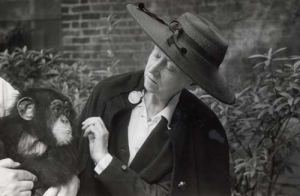 Can writing groups ever produce fine works of fiction or poetry?
One key challenge with writing groups is what some people refer to as "writing program syndrome," where participants write to please an appointed leader of dubious taste who doles out emotionally valuable rewards (grades, advancement), plus a group of fellow amateurs who can so often be parsimonious with the desired gift (approval), and generous with many of its antitheses (jealousy, subterfuge, backstabbing, frenemy behavior). These factors often combine to produce safe, bland, barely functional works of fiction and poetry that meet group expectations but wither as art, victims of their own caution and need.
The other challenge is a more overt one: sometimes writers receive so much criticism from the group or the leader that they doubt themselves and stop writing altogether. The poet Marianne Moore told an anecdote to fellow poet Donald Hall in a 1960 edition of The Paris Review about her translation of La Fontaine's fables. "I'm so naieve, so docile, I do tend to take anybody's word for anything the person says, even in matters of art." She goes on to tell a story about an editor in charge of translations at Macmillan who advised her to stop translating La Fontaine... to "put it away for a while" because it would take ten years and detract from her other writing.
"What is wrong?" she asked herself afterward, thoroughly shaken from her own judgment that this was a good project for her now, "Have I not a good ear? Are the meanings not sound?" Of course she had a splendid ear, it was the editor who -- French literature degree from Cornell and superior attitude notwithstanding -- intuitively knew nothing. Moore later trusted her own gut and produced the edition with Viking. Today the Macmillan editor is long forgotten, but Moore's fine translation (encouraged by both W. H. Auden and Ezra Pound) lives on.
* * *
With these challenges in mind, however, I do argue that it is possible to create a writing group that produces edgy, important, elegant, ambitious, or otherwise worthy work, and that does so in a way working in isolation can't match. All it requires is talent. I don't just mean talented writers in the group. I also mean a facilitator who is as much artist as administrator, as much participant as organizer, and who furthermore knows how to coax work from colleagues without guiding it in the name of "helping" or otherwise stepping on it. (Yes, you read that correctly, when it comes to art I do not believe it is ever the facilitator's place to guide, or even to mildly critique, but only to help bring forth. Midwives do not make babies or try to alter them, they merely assist God and nature in delivering them.)
More about this, perhaps, in a future post as we plan writing groups. My stance is radical, but functional. Authors who work in such environs often do publish. Whether the leader has anything to do with that is open for vigorous debate, but what matters is that the authors themselves tend to think so (much as Dumbo the elephant thought the feather helped him fly, although it did no such thing, he flew on his own). At this townhouse, I'm happy to be the feather for others. Just about any working artist with an eye for a gift in others and the good sense to get out of the way can play the feather's part.
Friday, October 13, 2006
The best city in the world for poetry?
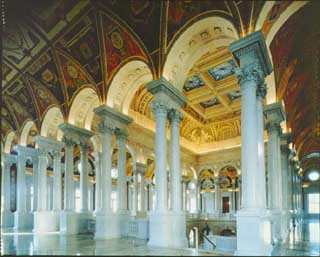 Some would say London, Paris or New York are better, but I choose Washington because of the Library of Congress and its amazing poetry series. Thanks to the office of the Poet Laureate (more precisely known as the Consultant in Poetry), we attract all kinds of cool poets, and it's usually completely free.
Two weeks ago U.S. Poet Laureate Donald Hall read to a packed house. Last night Pulitzer Prize-winning journalist and poet David Tucker, and the famous, venerable grizzled lion Galway Kinnell took the stage to a smaller but in many ways more devoted group (the Hall contingent had a number of college classes in attendance, many of whom surely showed up to get extra credit). Now it seems time to start taking small groups from this townhouse. The next event is Thursday, October 26.
Want to participate? After you RSVP, you should stop by this literary townhouse (address at the right) around 5 p.m. We'll walk down to Wisconsin Avenue, catch a 30 bus or the Circulator to Foggy Bottom, and then take Metro to Capitol South. Here's the event:
Jack Gilbert and Miranda Field
Jack Gilbert and Miranda Field
 Gilbert’s book Refusing Heaven (Knopf, 2005) won the National Book Critics Circle Award for poetry last year, and his chapbook, Tough Heaven: Poems of Pittsburgh, was published in limited edition this year by Pond Road Press. Soon after Gilbert’s first book, Views of Jeopardy (Yale University Press, 1962) was published, he received a Guggenheim fellowship and moved overseas to live in England, Denmark and Greece. He toured 15 other countries as a lecturer on American literature for the U.S. State Department. His second book, Monolithos, was a finalist for the Pulitzer Prize of 1983. The title is Greek for “single stone,” a reference to the terrain on the island of Santorini, where he had lived. He is also the author of The Great Fires: Poems 1982-1992.
Miranda Field was born and reared in London. Her poems have won the “Discovery”/The  Nation Award and a Pushcart Prize. Her debut book Swallow won a 2001 Bakeless Prize in poetry. According to the book’s publisher, Houghton Mifflin, “Swallow swoops and darts, tangling the lines we draw between the wild and the cultivated.” Field was a teaching fellow at the 2002 Bread Loaf Writers’ Conference, and lives in New York City with her husband, poet Tom Thompson, and children.
 Nation Award and a Pushcart Prize. Her debut book Swallow won a 2001 Bakeless Prize in poetry. According to the book’s publisher, Houghton Mifflin, “Swallow swoops and darts, tangling the lines we draw between the wild and the cultivated.” Field was a teaching fellow at the 2002 Bread Loaf Writers’ Conference, and lives in New York City with her husband, poet Tom Thompson, and children.
Sunday, October 08, 2006
Writing about cinema
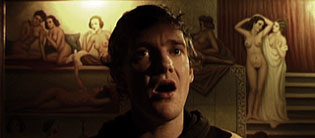 Washington is unmatched anywhere in the world for the variety, quality and quantity of free film programs available. William Wegman and Terry Gilliam are just two recent visual artists who have made experimental films as well, and who came to Washington to present and discuss their work, Wegman at the Reynolds Center/National Portrait Gallery, and Gilliam at the Hirshhorn. From time to time I'll announce a film program (especially in conjunction with an upcoming filmmaker's visit), and invite members of the Georgetown community to join me on a field trip. We usually travel by bus, and afterward we go to a cafe or bar to discuss the work and plan written pieces based on images from film.
 The first offering is an evening with Danish artist Jesper Just, whose works No Man is an Island II (2004), and Something to Love (2005) are playing daily in the Hirshhorn's Black Box. Your assignment if you choose to accept it is to see both films sometime between now and November 8. Then I'll take a group (five people max, RSVP by e-mail) to see him live at 7 p.m. on the 8th. He'll discuss both, and then afterward we will go to nearby Cafe Atlantico for a drink and discussion about how we can write in response to his work.
Wednesday, September 27, 2006
Will your university press book do well in a Taiwanese edition?
Publisher's Weekly reports that some entrepreneurial businesses are looking for university press titles to translate into Chinese. One company, Éditions du Flâneur, actively seeks such titles. Here is a passage quoted at length from PW:
Human science is six-year-old Flâneur's business. Founded by Tsun-shing Cheng, an associate professor at the National Tsing Hua University, it kicked off its program with the translation of Vocabulaire de la Psychoanalyse in December 2000. "We have published about a dozen titles, mostly French translations. Lately we have been looking at publications from various university presses around the world, and one which will be published soon is Leviathan and the Air-Pump from Princeton," says Cheng. With a catalogue that lists Burning Your Boats, Magic Toyshop, Nadja: Les yeux de Clerambault, Freud and the Non-European, Black Hamlet, Savage Freud and La pensee du dehors, it would seem that Flâneur caters mostly to field practitioners, postgraduate students and rather high-brow readers. But three forthcoming titles—Angela Carter's Nights at the Circus, E.M. Cioran's A Short History of Decay and Tsurumi Shunsuke's An Intellectual History of Wartime Japan, 1931–1945—reveal a different story. "We're branching out into works that are related to Taiwan and the Taiwanese people. Shunsuke, for instance, talks about the impact of war on the people involved. It's a very timely publication, given the present sentiment in this region about Japan's role in World War II and its past military aggression in Asia."
Explains editor Yi-zheng Zhou (Cheng's former student), "Our familiarity with the field has definitely been beneficial to our publishing program. We have a clear blueprint of what needs to be published or translated—i.e., essential readings and latest findings—and what to add to those already in the market in order to provide a more complete reading list in the field of psychotherapy and psychoanalysis."
At Flâneur, rights negotiation is quite a personal affair. "There's an advantage to being in the field and knowing the authors and the publishers. We get more flexible rights arrangements and, in most cases, lower charges. On the whole, European authors and publishing houses are more eager to get their titles published—wider dissemination of information being their main concern—and would accept a nominal fee to cover their expenses." The average fee paid by Cheng is around $1,200. "But, of course, some of the titles we bought aren't from the frontlist and, no doubt, cost less," Zhou adds.
Oxford University Press new hires and promotions
David McBride has joined Oxford University Press as senior editor for the academic politics list. McBride was most recently at Routledge, where he was also a senior editor, handling sociology, urban studies and geography. And Nancy Toff has been promoted from v-p and editorial director of school and young adult publishing to v-p and executive editor of history. Toff has been with OUP for 15 years. Also, Stefan Vranka has jumped from advertising and promotions manager for academic humanities to editor of classics, ancient history and archeology. (From Publisher's Weekly, 9/11/06)
Timothy Bent has been named executive editor, trade history at Oxford University Press. He was previously a senior editor at Harcourt and has worked at St. Martin's and Penguin. (From 9/18/06)
Timothy Bent has been named executive editor, trade history at Oxford University Press. He was previously a senior editor at Harcourt and has worked at St. Martin's and Penguin. (From 9/18/06)
Monday, September 25, 2006
Nature, Gardens and Georgetown
Be sure to RSVP if you plan to attend the book talk by Dr. Edward Barrows of the  Biology Department. Nature, Gardens and Georgetown is a beautiful new book celebrating the biological diversity of our campus, plus its rich history as a jewel in the DC landscape.
The get-together will include a short introduction by Edd, followed by questions from the group. We’ll have Cava (Spanish sparkling wine), nonalcoholic beverages, and light fare. The weather should be beautiful, and if people are interested Edd will lead a short walk around campus afterward.
Please send e-mail as soon as possible if you do plan to come. The event will be considered “sold out” when the count reaches 40. Thank you so much!
 Biology Department. Nature, Gardens and Georgetown is a beautiful new book celebrating the biological diversity of our campus, plus its rich history as a jewel in the DC landscape.
The get-together will include a short introduction by Edd, followed by questions from the group. We’ll have Cava (Spanish sparkling wine), nonalcoholic beverages, and light fare. The weather should be beautiful, and if people are interested Edd will lead a short walk around campus afterward.
Please send e-mail as soon as possible if you do plan to come. The event will be considered “sold out” when the count reaches 40. Thank you so much!
Friday, September 15, 2006
Professors, staff and students wanted to learn about literary submissions in a cozy, quirky setting.
Submitting work well is one of the most challenging aspects of publishing. More than just "sending stuff off," it is the fine art of matching specific literary work to the tastes and standards of various publishers and/or agents. Learning to craft query letters, model submissions after successful predecessors, and add that extra creative something that makes submissions stand out in a big pile is a lifelong process even for well-published authors.
Anyone who wishes to learn more about this is welcomed to spend some time -- from as little as one or two hours per month to as often as you wish -- working with Carole to submit literary work. This will involve writing query letters, creating selective agent and editor lists, indexing them intelligently according to past work published and stated interests, making contact with them by e-mail and occasional snail mail, and crafting strategies for the next step.
Please contact Carole with your personal interests in these processes, and your expected availability. All are welcome: professors, students, staff... this has the potential to be a community effort of monumental importance.
Anyone who wishes to learn more about this is welcomed to spend some time -- from as little as one or two hours per month to as often as you wish -- working with Carole to submit literary work. This will involve writing query letters, creating selective agent and editor lists, indexing them intelligently according to past work published and stated interests, making contact with them by e-mail and occasional snail mail, and crafting strategies for the next step.
Please contact Carole with your personal interests in these processes, and your expected availability. All are welcome: professors, students, staff... this has the potential to be a community effort of monumental importance.
Monday, September 11, 2006
The Artist's Way, ideas and suggestions
 Julia Cameron, a graduate of Georgetown's English department, is the author of the phenomenally successful international bestseller The Artist's Way, now in a 10th anniversary edition. John Glavin has long incorporated the book with his students in the Carroll Forum and as part of the preparation for fellowship candidates; it is an enduring classic for guiding artists of all types to productive glory. Separately, I have led many successful 12-week discussion circles for The Artist's Way through my private literary consulting efforts.
Now the two threads come together as circles begin to form at Georgetown to read and discuss the book in 12-week cycles. You can start anytime in the cycle, as circle members will each be in their own place with the book. We'll come together every other week to talk about the book, share ideas and encouragement, and plan for the future.
The first circle is for faculty and AAP staff. It will meet every other Monday at the townhouse (address to the right) from 5:30 - 7:30 p.m. beginning September 18. A second circle is a strong possibility if the first one proves popular, as we will limit members to 10. Please contact me directly if you would like to participate.
Thursday, September 07, 2006
If the Author's Guild Came to Campus, What Would You Ask?
Literary contracts may be the single most vexing aspect of publishing a book with a university press. Many professor/authors sign the boilerplate, assuming it can't be negotiated. But there is a lot of leeway in most contracts, and there may be some very good reasons why you want to think and negotiate before you sign.
Author's Guild Executive Director Paul Aiken and General Counsel Jan Constantine will be coming to campus in October (exact date and time TBA) to discuss university press contracts. Now is your chance to set the agenda by submitting your questions and concerns.
If you haven't yet heard of the Author's Guild, here's your chance to get acquainted. As they note on their web site, "The Authors Guild is the nation's largest and oldest society of published authors and the leading writers' advocate for fair compensation, effective copyright protection, and free expression." Its board includes authors like Oscar Hijuelos, Susan Cheever, Roger Angell, Sarah Vowell, and many others. Your $90 per year membership gets you up-to-the-minute contract advice, reasonably-priced template-based author web hosting, plus the satisfaction of knowing that you are supporting important litigation surrounding key issues such as copyright in an electronic age, e-books, Google's book copying ambitions and more.
Send e-mail to Carole with your questions and ideas for a session format tailored to your needs.
Author's Guild Executive Director Paul Aiken and General Counsel Jan Constantine will be coming to campus in October (exact date and time TBA) to discuss university press contracts. Now is your chance to set the agenda by submitting your questions and concerns.
If you haven't yet heard of the Author's Guild, here's your chance to get acquainted. As they note on their web site, "The Authors Guild is the nation's largest and oldest society of published authors and the leading writers' advocate for fair compensation, effective copyright protection, and free expression." Its board includes authors like Oscar Hijuelos, Susan Cheever, Roger Angell, Sarah Vowell, and many others. Your $90 per year membership gets you up-to-the-minute contract advice, reasonably-priced template-based author web hosting, plus the satisfaction of knowing that you are supporting important litigation surrounding key issues such as copyright in an electronic age, e-books, Google's book copying ambitions and more.
Send e-mail to Carole with your questions and ideas for a session format tailored to your needs.
Sport and Crime Writer Credits His Journalism Career to a College Writing Class
Yet more proof that successful writers often emerge from the academy, today's mediabistro.com news feed yields a tasty nugget: "Low Road to the High Glossies" showcases Jonathan Miles, who never intended to be a professional writer. He was just a smarter version of the campus party guy until he stumbled into a writing class at Ole Miss with award-winning author Barry Hannah (Yonder Stands Your Orphan, and many others), a legendary teacher who also lists Donna Tartt (The Secret History) as one of his protegés. Miles then moved to an apprenticeship with another former Hannah student, Larry Brown (Big Bad Love).
Here is what he told journalist Steven Ward about the accidental journey: "I wrote a short story, [and then] "Barry" (whose lit legend I was still ignorant of at the time) heaped some undue praise upon it, and I got it published in a little Oxford alt-weekly. Which led to the giant linchpin moment of my life: The author Larry Brown, who'd just quit the Oxford Fire Department to write full-time, read the story and took me under his wing. He taught me everything I know, to understate. It was an apprenticeship that lasted 12 years, until Larry's death in 2004. And it was much more than an apprenticeship: Larry was my father in almost every regard save biological. His wife and three children provoked a degree of local confusion by adding my name to his tombstone, but that's how it was. I have no idea what my life would look like now had Larry not entered it. I'd probably be singing 'Mustang Sally' for 50 bucks and free beer in some hotel bar off the interstate."
This is the second item in an occasional series about successful writers who were inspired in the university classroom.
Here is what he told journalist Steven Ward about the accidental journey: "I wrote a short story, [and then] "Barry" (whose lit legend I was still ignorant of at the time) heaped some undue praise upon it, and I got it published in a little Oxford alt-weekly. Which led to the giant linchpin moment of my life: The author Larry Brown, who'd just quit the Oxford Fire Department to write full-time, read the story and took me under his wing. He taught me everything I know, to understate. It was an apprenticeship that lasted 12 years, until Larry's death in 2004. And it was much more than an apprenticeship: Larry was my father in almost every regard save biological. His wife and three children provoked a degree of local confusion by adding my name to his tombstone, but that's how it was. I have no idea what my life would look like now had Larry not entered it. I'd probably be singing 'Mustang Sally' for 50 bucks and free beer in some hotel bar off the interstate."
This is the second item in an occasional series about successful writers who were inspired in the university classroom.
Wednesday, September 06, 2006
2006 Novella Contest at Miami University Press

Short stories have been making a comeback for a while now, which is welcome news to this Lorrie Moore, Jhumpa Lahiri and Ethan Canin fan. But whither the novella? Miami University Press in Oxford, Ohio has one answer, with its 2006 Novella Prize.
Novellas have long been popular with readers. A River Runs Through It, below, features a novella as the title work, Stephen King's novella The Body was turned into the memorable movie "Stand By Me," and many short novels such as Marly Youmans's Catherwood are technically novellas. Your definition of novella and mine may vary, but MUP puts 'em between 18,000 and 40,000 words. For those of you who are visual, picture a novel about 2/3 of an inch across the spine: that's roughly 90,000 words.
If you haven't written your novella yet, then limber up those hunting-and-pecking fingers and give it a try. Submissions are due by October 15. Just one word of caution. Make sure a press is right for you before you submit an entry to any contest. Get to know its work, and feel comfortable with its other authors as your colleagues. Many a writer has "won" a contest only to find that they felt dubious about the publication (and the often-stingy contract terms!) that followed. This one looks pretty good to me, which is why I'm posting it here, but it's a good idea to do background research to see how it jibes with your own sense of your career.
Tuesday, September 05, 2006
Still selling at 30, A River Runs Through It is a university press title!
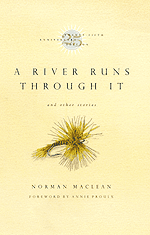 Did you know that Norman McLean's bestselling novella A River Runs Through It (part of the story collection of the same name) is published by the University of Chicago Press? I didn't until I saw a copy beautifully displayed in the office of a Chicago editor. McLean was an English professor at Chicago in the early 1930s, and he later earned a doctorate there. When Chicago published his book in 1976, it was the first work of fiction for that press, and it very nearly won the Pulitzer Prize (apparently there was some controversy over whether it was fictional enough). Most people have heard of it because of the 1992 movie directed by Robert Redford.
Chicago issued a special 25th-anniversary edition in 2001, and you can read about it here. Best of all for this charming story of a bestseller arising from the academy, author McLean published it -- his first book -- when he was 70 years old.
Monday, September 04, 2006
Authors Who Were Inspired in the University Classroom
 This is the first post of an occasional series focusing on bestselling or well-known authors who got their start in the university classroom. Our first author is bestseller Michael Connelly, author of The Lincoln Lawyer, currently #7 on the Publisher's Weekly Paperback Bestsellers list, with a good run in hardcover including spikes to #1. He has won the Quill, the Edgar, the Ian Fleming Steel Dagger, and many other awards. Here is what his web site says about his academic path: "Michael Connelly decided to become a writer after discovering the books of Raymond Chandler while attending the University of Florida. Once he decided on this direction he chose a major in journalism and a minor in creative writing — a curriculum in which one of his teachers was novelist Harry Crews."
Friday, March 03, 2006
Are You a Publishing Veteran?
Then heaven knows we need your input. If you have a distinguished publishing record -- especially multiple titles with the same press -- and some time to share your experience with others, let us know! We're establishing a network of on-campus experts to guide authors in the specifics of publishing with various presses.
Contribute Your Contracts
 Please contribute copies of your literary contracts to our archive! The more actual contracts we can collect from various publishers, the better this office will be able to serve you by negotiating better and stronger deals over time.
Take a "Bookstore Ramble"
 Are you thinking about writing for a broader audience? A lively tour of a major bookstore (usually the Barnes & Noble on M Street) will help you figure out where your book might live on those crowded shelves. You'll get a sense of where your book belongs, and who its literary neighbors will be, plus how to get a better position. You'll learn little-known industry secrets of how books are acquired, sold, and tracked. You’ll even learn the answer to that mysterious question, "What is a typical bookstore's #1 product?" (Hint: It's definitely not books. In fact, it's not even an item! Or is that giving away too much?)
Why Academic Literary Advising Now?
 In many ways, scholarly publishing has changed. Some university presses are under increasing pressure to make money. They often do it in what seem like crazy ways (£100 cover price for a book? No image budget? Zero honoraria? Not enough promotion?). Meanwhile, the elite trade publishers like Knopf, FSG and Scribner are often playing by very different rules. We're here to help you figure out what's normal, what's out-of-bounds, and where your work might fit in this new publishing world.
Subscribe to:
Posts (Atom)