Showing posts with label poetry. Show all posts

Saturday, March 21, 2009

Perusing "The New England Review"

The journal experiment has been such a glorious thing, with unexpected surprises. This office's first copy of The New England Review arrived, and again, it is different from any other journal out there. The more I practice this fascinating exercise of studying literary journals, the more convinced I become that the time-honored practice of writing a poem or a short story in private and then sending it various places to see where it sticks is less my style -- I prefer the notion of understanding a journal as an entity and writing just for it.

(Flannery O'Connor might argue with me. She had her own way, and in the late 1940s she resisted so strongly her first editor's pleas for conformity that they ended up not working together, with each party declaring the other intractable. Maybe she was right. But this is for now my opinion.)

My first impression of The New England Review is that its size and the unfussy quality of the paper combine to give it the feel of a workbook. Unlike The Georgia Review that is rich with illustrations, or The Virginia Quarterly Review that features photography leaning toward a global, human rights focus, this copy of NER has no images except black-and-white ones in the ads, and the simple cover is a closeup of an abstract painting. No fuss, no drumrolls, just the work, laid out page by austere page. There is a certain cleanness to that, a lack of sentimentality. Also, NER has less of the perceived pretension that kept me away from the literary journals for such an unfortunately long time. Dare I say, it seems approachable. (But then, so does Ploughshares in a different way).

Of the 27 contributors to this 30th-anniversary edition, nine are faculty members, and that's good news both for those employed within and without the academy. For academics, it is comforting to know that a full third of the contributions come from us. For non-academics, it is good to know that two-thirds work elsewhere and publish very well. The notion that there would be a robust representation of academics but not an overwhelming majority interests me. I don't know what it means, but it seems balanced.

The oddest thing about all of this is that I have begun to read more poetry. It has long been my greatest challenge, as I have consistently preferred prose forms. But the poetry showcased in these journals has tended toward the extraordinary, and I begin each day with anticipation of it.

To a reader who might ask if I read these journals in one sitting, the answer is absolutely not. I try to make one copy last about two months, with readings from it every day or two. Sometimes I'll go a few days and not read, and then other times I might read for an hour, but I do dip in and out. One goal of the journal experiments -- besides learning the nature of many journals by reading them as a regular subscriber, and besides heightening awareness of their richness for those aspiring authors who may benefit richly from discovering that world -- is to make shorter work such as short fiction and poetry part of the fabric of everyday life. I eat, I wash, I walk the dogs, I read poems, I garden, I visit friends, I read short fiction, I dance, I sing, I pray, I study, I read novels, I rise, I sleep, I worship, I read nonfiction. Amen.

Wednesday, November 26, 2008

POETRY magazine has the coolest covers. Ever!

Just a note that I love many of POETRY magazine's covers, and I can't say that about all journals. A surprising number of them are actually off-putting. But POETRY has some amazing art. Just visit this link and click around: http://www.poetryfoundation.org/poetrymagazine/pastissues.html

The Journal Experiment: Cracking Poetry's Code

One of my glorious correspondents sent this insider information about getting her work into POETRY magazine. Part of the secret, it seems, is persistence, but not just any ol' kind. Many authors interpret persistence as "sending the same thing again and again." (These souls are often of the "I'm a genius, but those idiot editors can't recognize it" school.) Instead, my correspondent intelligently made the assumption that most successful journal editors actually know what they're doing, and s/he adjusted accordingly.

"Like all poets, I have hazarded a submission to POETRY magazine. Like all poets, I received my generic rejections--three times over. I crossed paths with the editor and sent again, hopeful; again, rejected (though gracefully, with a personal note, by which I mean a hand-scribbled sentence). When I sent again, I stacked the deck: a long poem, a formally acrobatic poem, an ekphrasis. I'm not sure if there's any particular code-cracking to POETRY--as safes go, it is dynamite-proof--but somehow, I made it in. Three poems forthcoming! (She says, before fainting in exhaustion and relief.)"

Besides the "I'm a genius" assumption, many authors come to me after one or two rejections, heart-in-hand, crushed that they weren't loved enough to be published (yet). Huh? I usually smile and say I don't want to hear any complaints until at least rejection number 30. Authors tend to exaggerate the number of times they actually tried, and they also think that rejections are even remotely personal. In fact, they're so impersonal that unless you made a particularly strong impression for some reason, you can probably try again in a week with no fear of even being recognized, let alone spotted as "That doofwad dreamer we so wisely bounced last time."

Thursday, September 18, 2008

I hear your anger, and it makes the sound of a cliché

A handful of my trade book authors (I call all of the more than 300 authors who consult with me from time to time "mine"... make of that what you will) are angry -- furious with Big Publishing for not yet having the vision to accept them, and hurt by a process of submitting to agents that they often describe as "heartbreaking." They have come to me in frustration, in therapy, in tears.

Part of me sympathizes, but another part wants to know why such stress? Why not start with smaller bits and build up interest until a book is all but inevitable as an outgrowth of those more modest "gets"? When I suggest to these authors that they gain some creative yes-es, such as publication in regional newspapers or on regional public radio, or acceptance from various literary journals, their anger can sometimes rise higher. "Little" wasn't the goal! New York Publishing or bust!


Okay, okay, I hear that (I say to them in my mind), but what I hear louder is the cliché of that.

Many glorious careers start small. Others who soar in the literary firmament and who have multiple books deliberately return to their roots in order to keep it real, hone their craft, etc. The truly great are never too big to work regionally, to publish intimately. Remember the poet Jane Kenyon? She was a brilliant woman who could publish her work anywhere, but she chose (among other things) to consistently write essays for her local New England newspaper because she wanted her neighbors to read her work, and she knew that for the most part they did not read poetry or subscribe to The New Yorker or Ploughshares or whatever.

Wednesday, October 18, 2006

"Have I not a good ear?"

Can writing groups ever produce fine works of fiction or poetry?

One key challenge with writing groups is what some people refer to as "writing program syndrome," where participants write to please an appointed leader of dubious taste who doles out emotionally valuable rewards (grades, advancement), plus a group of fellow amateurs who can so often be parsimonious with the desired gift (approval), and generous with many of its antitheses (jealousy, subterfuge, backstabbing, frenemy behavior). These factors often combine to produce safe, bland, barely functional works of fiction and poetry that meet group expectations but wither as art, victims of their own caution and need.

The other challenge is a more overt one: sometimes writers receive so much criticism from the group or the leader that they doubt themselves and stop writing altogether. The poet Marianne Moore told an anecdote to fellow poet Donald Hall in a 1960 edition of The Paris Review about her translation of La Fontaine's fables. "I'm so naieve, so docile, I do tend to take anybody's word for anything the person says, even in matters of art." She goes on to tell a story about an editor in charge of translations at Macmillan who advised her to stop translating La Fontaine... to "put it away for a while" because it would take ten years and detract from her other writing.

"What is wrong?" she asked herself afterward, thoroughly shaken from her own judgment that this was a good project for her now, "Have I not a good ear? Are the meanings not sound?" Of course she had a splendid ear, it was the editor who -- French literature degree from Cornell and superior attitude notwithstanding -- intuitively knew nothing. Moore later trusted her own gut and produced the edition with Viking. Today the Macmillan editor is long forgotten, but Moore's fine translation (encouraged by both W. H. Auden and Ezra Pound) lives on.

* * *

With these challenges in mind, however, I do argue that it is possible to create a writing group that produces edgy, important, elegant, ambitious, or otherwise worthy work, and that does so in a way working in isolation can't match. All it requires is talent. I don't just mean talented writers in the group. I also mean a facilitator who is as much artist as administrator, as much participant as organizer, and who furthermore knows how to coax work from colleagues without guiding it in the name of "helping" or otherwise stepping on it. (Yes, you read that correctly, when it comes to art I do not believe it is ever the facilitator's place to guide, or even to mildly critique, but only to help bring forth. Midwives do not make babies or try to alter them, they merely assist God and nature in delivering them.)

More about this, perhaps, in a future post as we plan writing groups. My stance is radical, but functional. Authors who work in such environs often do publish. Whether the leader has anything to do with that is open for vigorous debate, but what matters is that the authors themselves tend to think so (much as Dumbo the elephant thought the feather helped him fly, although it did no such thing, he flew on his own). At this townhouse, I'm happy to be the feather for others. Just about any working artist with an eye for a gift in others and the good sense to get out of the way can play the feather's part.

Friday, October 13, 2006

The best city in the world for poetry?

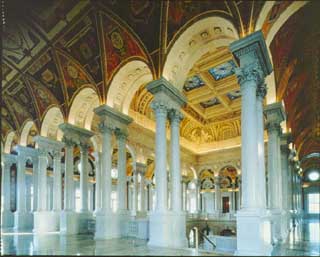
Some would say London, Paris or New York are better, but I choose Washington because of the Library of Congress and its amazing poetry series. Thanks to the office of the Poet Laureate (more precisely known as the Consultant in Poetry), we attract all kinds of cool poets, and it's usually completely free.

Two weeks ago U.S. Poet Laureate Donald Hall read to a packed house. Last night Pulitzer Prize-winning journalist and poet David Tucker, and the famous, venerable grizzled lion Galway Kinnell took the stage to a smaller but in many ways more devoted group (the Hall contingent had a number of college classes in attendance, many of whom surely showed up to get extra credit). Now it seems time to start taking small groups from this townhouse. The next event is Thursday, October 26.

Want to participate? After you RSVP, you should stop by this literary townhouse (address at the right) around 5 p.m. We'll walk down to Wisconsin Avenue, catch a 30 bus or the Circulator to Foggy Bottom, and then take Metro to Capitol South. Here's the event:

Jack Gilbert and Miranda Field

Gilbert’s book Refusing Heaven (Knopf, 2005) won the National Book Critics Circle Award for poetry last year, and his chapbook, Tough Heaven: Poems of Pittsburgh, was published in limited edition this year by Pond Road Press. Soon after Gilbert’s first book, Views of Jeopardy (Yale University Press, 1962) was published, he received a Guggenheim fellowship and moved overseas to live in England, Denmark and Greece. He toured 15 other countries as a lecturer on American literature for the U.S. State Department. His second book, Monolithos, was a finalist for the Pulitzer Prize of 1983. The title is Greek for “single stone,” a reference to the terrain on the island of Santorini, where he had lived. He is also the author of The Great Fires: Poems 1982-1992.

Miranda Field was born and reared in London. Her poems have won the “Discovery”/The Nation Award and a Pushcart Prize. Her debut book Swallow won a 2001 Bakeless Prize in poetry. According to the book’s publisher, Houghton Mifflin, “Swallow swoops and darts, tangling the lines we draw between the wild and the cultivated.” Field was a teaching fellow at the 2002 Bread Loaf Writers’ Conference, and lives in New York City with her husband, poet Tom Thompson, and children.