The University of Nebraska Press gives a helpful pamphlet to their authors. Unassumingly titled (in all lower-case) an author's guide to book marketing, it helps university press authors figure out what steps to take to help their books succeed. If I were a betting woman (and okay, sometimes I am), I'd bet that fewer than one-quarter of their authors actually, carefully read it.
Why not? Well, partly because typical authors believe that book marketing is a publisher's job. Unless you got a half a million upfront for your book, it usually isn't. The most effective, committed, creative, devoted marketer a book will ever have is its own author. Even shy writers can do a lot to help make certain their books succeed. In the next few posts I will excerpt this helpful pamphlet, and comment on it.
1. THE AUTHOR INFORMATION FORM (AIF). Nebraska writes, "The AIF is a critical planning tool used to develop marketing strategy." No kidding. It's crucial. Yet so many authors I know simply fill it out as quickly as they can, sometimes in longhand while sitting in the publisher's office. But taking your time with this important document can mean the sale of many more copies of your book.
The AIF asks you questions about how you came to write the book, what influences you credit, where you sent to high school, college, and graduate school, what regions of the country and world you have lived in, what famous or influential people you know, and much more. The more thorough you are in filling it out, the better your publicist (who has a wildly difficult job that we'll discuss in detail later) will be able to brainstorm potential connections for you. Example. What happens if you only list the schools you graduated from, but not all the schools you attended? Well, if you were (say) a military brat and attended several high schools, or if you moved around and attended more than one college, they may all be eager to claim you as an alumnus when you publish. This means your book will be mentioned in alumni newsletters and magazines, you may get noticed on the web site, and more. If you leave out the schools you attended but didn't graduate from, you'll unnecessarily cut your opportunities.
The same goes for states where you lived. What if you can claim Virginia, South Carolina and Florida? Why not do so? They'll all treat you like a native daughter or son when your career takes off. Even if your spouse or partner lived in several states, or you only vacation someplace every year, list it. You never know what Chamber of Commerce or Arts Council will make it their business to help promote you. People want to be proud of you, especially organizations whose very existence depends upon the success of their members.
In the next post we'll examine publishers' seasonal catalogues, and how they affect you as a university press author.
Sunday, October 22, 2006


Wednesday, October 18, 2006
"Have I not a good ear?"
 Can writing groups ever produce fine works of fiction or poetry?
One key challenge with writing groups is what some people refer to as "writing program syndrome," where participants write to please an appointed leader of dubious taste who doles out emotionally valuable rewards (grades, advancement), plus a group of fellow amateurs who can so often be parsimonious with the desired gift (approval), and generous with many of its antitheses (jealousy, subterfuge, backstabbing, frenemy behavior). These factors often combine to produce safe, bland, barely functional works of fiction and poetry that meet group expectations but wither as art, victims of their own caution and need.
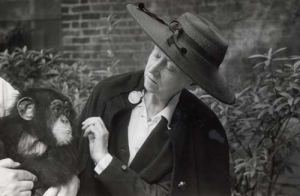
The other challenge is a more overt one: sometimes writers receive so much criticism from the group or the leader that they doubt themselves and stop writing altogether. The poet Marianne Moore told an anecdote to fellow poet Donald Hall in a 1960 edition of The Paris Review about her translation of La Fontaine's fables. "I'm so naieve, so docile, I do tend to take anybody's word for anything the person says, even in matters of art." She goes on to tell a story about an editor in charge of translations at Macmillan who advised her to stop translating La Fontaine... to "put it away for a while" because it would take ten years and detract from her other writing.
"What is wrong?" she asked herself afterward, thoroughly shaken from her own judgment that this was a good project for her now, "Have I not a good ear? Are the meanings not sound?" Of course she had a splendid ear, it was the editor who -- French literature degree from Cornell and superior attitude notwithstanding -- intuitively knew nothing. Moore later trusted her own gut and produced the edition with Viking. Today the Macmillan editor is long forgotten, but Moore's fine translation (encouraged by both W. H. Auden and Ezra Pound) lives on.
* * *
With these challenges in mind, however, I do argue that it is possible to create a writing group that produces edgy, important, elegant, ambitious, or otherwise worthy work, and that does so in a way working in isolation can't match. All it requires is talent. I don't just mean talented writers in the group. I also mean a facilitator who is as much artist as administrator, as much participant as organizer, and who furthermore knows how to coax work from colleagues without guiding it in the name of "helping" or otherwise stepping on it. (Yes, you read that correctly, when it comes to art I do not believe it is ever the facilitator's place to guide, or even to mildly critique, but only to help bring forth. Midwives do not make babies or try to alter them, they merely assist God and nature in delivering them.)
More about this, perhaps, in a future post as we plan writing groups. My stance is radical, but functional. Authors who work in such environs often do publish. Whether the leader has anything to do with that is open for vigorous debate, but what matters is that the authors themselves tend to think so (much as Dumbo the elephant thought the feather helped him fly, although it did no such thing, he flew on his own). At this townhouse, I'm happy to be the feather for others. Just about any working artist with an eye for a gift in others and the good sense to get out of the way can play the feather's part.
Friday, October 13, 2006
The best city in the world for poetry?
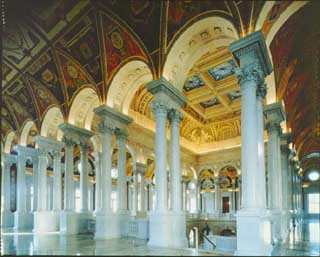 Some would say London, Paris or New York are better, but I choose Washington because of the Library of Congress and its amazing poetry series. Thanks to the office of the Poet Laureate (more precisely known as the Consultant in Poetry), we attract all kinds of cool poets, and it's usually completely free.
Two weeks ago U.S. Poet Laureate Donald Hall read to a packed house. Last night Pulitzer Prize-winning journalist and poet David Tucker, and the famous, venerable grizzled lion Galway Kinnell took the stage to a smaller but in many ways more devoted group (the Hall contingent had a number of college classes in attendance, many of whom surely showed up to get extra credit). Now it seems time to start taking small groups from this townhouse. The next event is Thursday, October 26.
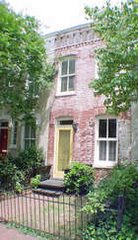
Want to participate? After you RSVP, you should stop by this literary townhouse (address at the right) around 5 p.m. We'll walk down to Wisconsin Avenue, catch a 30 bus or the Circulator to Foggy Bottom, and then take Metro to Capitol South. Here's the event:
Jack Gilbert and Miranda Field
Jack Gilbert and Miranda Field
 Gilbert’s book Refusing Heaven (Knopf, 2005) won the National Book Critics Circle Award for poetry last year, and his chapbook, Tough Heaven: Poems of Pittsburgh, was published in limited edition this year by Pond Road Press. Soon after Gilbert’s first book, Views of Jeopardy (Yale University Press, 1962) was published, he received a Guggenheim fellowship and moved overseas to live in England, Denmark and Greece. He toured 15 other countries as a lecturer on American literature for the U.S. State Department. His second book, Monolithos, was a finalist for the Pulitzer Prize of 1983. The title is Greek for “single stone,” a reference to the terrain on the island of Santorini, where he had lived. He is also the author of The Great Fires: Poems 1982-1992.
Miranda Field was born and reared in London. Her poems have won the “Discovery”/The  Nation Award and a Pushcart Prize. Her debut book Swallow won a 2001 Bakeless Prize in poetry. According to the book’s publisher, Houghton Mifflin, “Swallow swoops and darts, tangling the lines we draw between the wild and the cultivated.” Field was a teaching fellow at the 2002 Bread Loaf Writers’ Conference, and lives in New York City with her husband, poet Tom Thompson, and children.
 Nation Award and a Pushcart Prize. Her debut book Swallow won a 2001 Bakeless Prize in poetry. According to the book’s publisher, Houghton Mifflin, “Swallow swoops and darts, tangling the lines we draw between the wild and the cultivated.” Field was a teaching fellow at the 2002 Bread Loaf Writers’ Conference, and lives in New York City with her husband, poet Tom Thompson, and children.
Sunday, October 08, 2006
Writing about cinema
 Washington is unmatched anywhere in the world for the variety, quality and quantity of free film programs available. William Wegman and Terry Gilliam are just two recent visual artists who have made experimental films as well, and who came to Washington to present and discuss their work, Wegman at the Reynolds Center/National Portrait Gallery, and Gilliam at the Hirshhorn. From time to time I'll announce a film program (especially in conjunction with an upcoming filmmaker's visit), and invite members of the Georgetown community to join me on a field trip. We usually travel by bus, and afterward we go to a cafe or bar to discuss the work and plan written pieces based on images from film.
 The first offering is an evening with Danish artist Jesper Just, whose works No Man is an Island II (2004), and Something to Love (2005) are playing daily in the Hirshhorn's Black Box. Your assignment if you choose to accept it is to see both films sometime between now and November 8. Then I'll take a group (five people max, RSVP by e-mail) to see him live at 7 p.m. on the 8th. He'll discuss both, and then afterward we will go to nearby Cafe Atlantico for a drink and discussion about how we can write in response to his work.
Wednesday, September 27, 2006
Will your university press book do well in a Taiwanese edition?
Publisher's Weekly reports that some entrepreneurial businesses are looking for university press titles to translate into Chinese. One company, Éditions du Flâneur, actively seeks such titles. Here is a passage quoted at length from PW:
Human science is six-year-old Flâneur's business. Founded by Tsun-shing Cheng, an associate professor at the National Tsing Hua University, it kicked off its program with the translation of Vocabulaire de la Psychoanalyse in December 2000. "We have published about a dozen titles, mostly French translations. Lately we have been looking at publications from various university presses around the world, and one which will be published soon is Leviathan and the Air-Pump from Princeton," says Cheng. With a catalogue that lists Burning Your Boats, Magic Toyshop, Nadja: Les yeux de Clerambault, Freud and the Non-European, Black Hamlet, Savage Freud and La pensee du dehors, it would seem that Flâneur caters mostly to field practitioners, postgraduate students and rather high-brow readers. But three forthcoming titles—Angela Carter's Nights at the Circus, E.M. Cioran's A Short History of Decay and Tsurumi Shunsuke's An Intellectual History of Wartime Japan, 1931–1945—reveal a different story. "We're branching out into works that are related to Taiwan and the Taiwanese people. Shunsuke, for instance, talks about the impact of war on the people involved. It's a very timely publication, given the present sentiment in this region about Japan's role in World War II and its past military aggression in Asia."
Explains editor Yi-zheng Zhou (Cheng's former student), "Our familiarity with the field has definitely been beneficial to our publishing program. We have a clear blueprint of what needs to be published or translated—i.e., essential readings and latest findings—and what to add to those already in the market in order to provide a more complete reading list in the field of psychotherapy and psychoanalysis."
At Flâneur, rights negotiation is quite a personal affair. "There's an advantage to being in the field and knowing the authors and the publishers. We get more flexible rights arrangements and, in most cases, lower charges. On the whole, European authors and publishing houses are more eager to get their titles published—wider dissemination of information being their main concern—and would accept a nominal fee to cover their expenses." The average fee paid by Cheng is around $1,200. "But, of course, some of the titles we bought aren't from the frontlist and, no doubt, cost less," Zhou adds.
Oxford University Press new hires and promotions
David McBride has joined Oxford University Press as senior editor for the academic politics list. McBride was most recently at Routledge, where he was also a senior editor, handling sociology, urban studies and geography. And Nancy Toff has been promoted from v-p and editorial director of school and young adult publishing to v-p and executive editor of history. Toff has been with OUP for 15 years. Also, Stefan Vranka has jumped from advertising and promotions manager for academic humanities to editor of classics, ancient history and archeology. (From Publisher's Weekly, 9/11/06)
Timothy Bent has been named executive editor, trade history at Oxford University Press. He was previously a senior editor at Harcourt and has worked at St. Martin's and Penguin. (From 9/18/06)
Timothy Bent has been named executive editor, trade history at Oxford University Press. He was previously a senior editor at Harcourt and has worked at St. Martin's and Penguin. (From 9/18/06)
Monday, September 25, 2006
Nature, Gardens and Georgetown
Be sure to RSVP if you plan to attend the book talk by Dr. Edward Barrows of the  Biology Department. Nature, Gardens and Georgetown is a beautiful new book celebrating the biological diversity of our campus, plus its rich history as a jewel in the DC landscape.
The get-together will include a short introduction by Edd, followed by questions from the group. We’ll have Cava (Spanish sparkling wine), nonalcoholic beverages, and light fare. The weather should be beautiful, and if people are interested Edd will lead a short walk around campus afterward.
Please send e-mail as soon as possible if you do plan to come. The event will be considered “sold out” when the count reaches 40. Thank you so much!
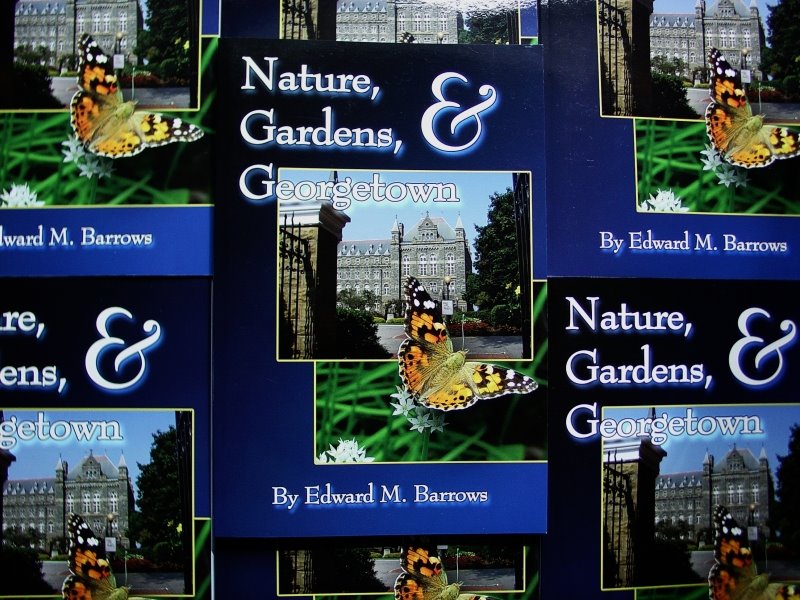 Biology Department. Nature, Gardens and Georgetown is a beautiful new book celebrating the biological diversity of our campus, plus its rich history as a jewel in the DC landscape.
The get-together will include a short introduction by Edd, followed by questions from the group. We’ll have Cava (Spanish sparkling wine), nonalcoholic beverages, and light fare. The weather should be beautiful, and if people are interested Edd will lead a short walk around campus afterward.
Please send e-mail as soon as possible if you do plan to come. The event will be considered “sold out” when the count reaches 40. Thank you so much!
Friday, September 15, 2006
Professors, staff and students wanted to learn about literary submissions in a cozy, quirky setting.
Submitting work well is one of the most challenging aspects of publishing. More than just "sending stuff off," it is the fine art of matching specific literary work to the tastes and standards of various publishers and/or agents. Learning to craft query letters, model submissions after successful predecessors, and add that extra creative something that makes submissions stand out in a big pile is a lifelong process even for well-published authors.
Anyone who wishes to learn more about this is welcomed to spend some time -- from as little as one or two hours per month to as often as you wish -- working with Carole to submit literary work. This will involve writing query letters, creating selective agent and editor lists, indexing them intelligently according to past work published and stated interests, making contact with them by e-mail and occasional snail mail, and crafting strategies for the next step.
Please contact Carole with your personal interests in these processes, and your expected availability. All are welcome: professors, students, staff... this has the potential to be a community effort of monumental importance.
Anyone who wishes to learn more about this is welcomed to spend some time -- from as little as one or two hours per month to as often as you wish -- working with Carole to submit literary work. This will involve writing query letters, creating selective agent and editor lists, indexing them intelligently according to past work published and stated interests, making contact with them by e-mail and occasional snail mail, and crafting strategies for the next step.
Please contact Carole with your personal interests in these processes, and your expected availability. All are welcome: professors, students, staff... this has the potential to be a community effort of monumental importance.
Monday, September 11, 2006
The Artist's Way, ideas and suggestions
 Julia Cameron, a graduate of Georgetown's English department, is the author of the phenomenally successful international bestseller The Artist's Way, now in a 10th anniversary edition. John Glavin has long incorporated the book with his students in the Carroll Forum and as part of the preparation for fellowship candidates; it is an enduring classic for guiding artists of all types to productive glory. Separately, I have led many successful 12-week discussion circles for The Artist's Way through my private literary consulting efforts.
Now the two threads come together as circles begin to form at Georgetown to read and discuss the book in 12-week cycles. You can start anytime in the cycle, as circle members will each be in their own place with the book. We'll come together every other week to talk about the book, share ideas and encouragement, and plan for the future.
The first circle is for faculty and AAP staff. It will meet every other Monday at the townhouse (address to the right) from 5:30 - 7:30 p.m. beginning September 18. A second circle is a strong possibility if the first one proves popular, as we will limit members to 10. Please contact me directly if you would like to participate.
Thursday, September 07, 2006
If the Author's Guild Came to Campus, What Would You Ask?
Literary contracts may be the single most vexing aspect of publishing a book with a university press. Many professor/authors sign the boilerplate, assuming it can't be negotiated. But there is a lot of leeway in most contracts, and there may be some very good reasons why you want to think and negotiate before you sign.
Author's Guild Executive Director Paul Aiken and General Counsel Jan Constantine will be coming to campus in October (exact date and time TBA) to discuss university press contracts. Now is your chance to set the agenda by submitting your questions and concerns.
If you haven't yet heard of the Author's Guild, here's your chance to get acquainted. As they note on their web site, "The Authors Guild is the nation's largest and oldest society of published authors and the leading writers' advocate for fair compensation, effective copyright protection, and free expression." Its board includes authors like Oscar Hijuelos, Susan Cheever, Roger Angell, Sarah Vowell, and many others. Your $90 per year membership gets you up-to-the-minute contract advice, reasonably-priced template-based author web hosting, plus the satisfaction of knowing that you are supporting important litigation surrounding key issues such as copyright in an electronic age, e-books, Google's book copying ambitions and more.
Send e-mail to Carole with your questions and ideas for a session format tailored to your needs.
Author's Guild Executive Director Paul Aiken and General Counsel Jan Constantine will be coming to campus in October (exact date and time TBA) to discuss university press contracts. Now is your chance to set the agenda by submitting your questions and concerns.
If you haven't yet heard of the Author's Guild, here's your chance to get acquainted. As they note on their web site, "The Authors Guild is the nation's largest and oldest society of published authors and the leading writers' advocate for fair compensation, effective copyright protection, and free expression." Its board includes authors like Oscar Hijuelos, Susan Cheever, Roger Angell, Sarah Vowell, and many others. Your $90 per year membership gets you up-to-the-minute contract advice, reasonably-priced template-based author web hosting, plus the satisfaction of knowing that you are supporting important litigation surrounding key issues such as copyright in an electronic age, e-books, Google's book copying ambitions and more.
Send e-mail to Carole with your questions and ideas for a session format tailored to your needs.
Sport and Crime Writer Credits His Journalism Career to a College Writing Class
Yet more proof that successful writers often emerge from the academy, today's mediabistro.com news feed yields a tasty nugget: "Low Road to the High Glossies" showcases Jonathan Miles, who never intended to be a professional writer. He was just a smarter version of the campus party guy until he stumbled into a writing class at Ole Miss with award-winning author Barry Hannah (Yonder Stands Your Orphan, and many others), a legendary teacher who also lists Donna Tartt (The Secret History) as one of his protegés. Miles then moved to an apprenticeship with another former Hannah student, Larry Brown (Big Bad Love).
Here is what he told journalist Steven Ward about the accidental journey: "I wrote a short story, [and then] "Barry" (whose lit legend I was still ignorant of at the time) heaped some undue praise upon it, and I got it published in a little Oxford alt-weekly. Which led to the giant linchpin moment of my life: The author Larry Brown, who'd just quit the Oxford Fire Department to write full-time, read the story and took me under his wing. He taught me everything I know, to understate. It was an apprenticeship that lasted 12 years, until Larry's death in 2004. And it was much more than an apprenticeship: Larry was my father in almost every regard save biological. His wife and three children provoked a degree of local confusion by adding my name to his tombstone, but that's how it was. I have no idea what my life would look like now had Larry not entered it. I'd probably be singing 'Mustang Sally' for 50 bucks and free beer in some hotel bar off the interstate."
This is the second item in an occasional series about successful writers who were inspired in the university classroom.
Here is what he told journalist Steven Ward about the accidental journey: "I wrote a short story, [and then] "Barry" (whose lit legend I was still ignorant of at the time) heaped some undue praise upon it, and I got it published in a little Oxford alt-weekly. Which led to the giant linchpin moment of my life: The author Larry Brown, who'd just quit the Oxford Fire Department to write full-time, read the story and took me under his wing. He taught me everything I know, to understate. It was an apprenticeship that lasted 12 years, until Larry's death in 2004. And it was much more than an apprenticeship: Larry was my father in almost every regard save biological. His wife and three children provoked a degree of local confusion by adding my name to his tombstone, but that's how it was. I have no idea what my life would look like now had Larry not entered it. I'd probably be singing 'Mustang Sally' for 50 bucks and free beer in some hotel bar off the interstate."
This is the second item in an occasional series about successful writers who were inspired in the university classroom.
Wednesday, September 06, 2006
2006 Novella Contest at Miami University Press

Short stories have been making a comeback for a while now, which is welcome news to this Lorrie Moore, Jhumpa Lahiri and Ethan Canin fan. But whither the novella? Miami University Press in Oxford, Ohio has one answer, with its 2006 Novella Prize.
Novellas have long been popular with readers. A River Runs Through It, below, features a novella as the title work, Stephen King's novella The Body was turned into the memorable movie "Stand By Me," and many short novels such as Marly Youmans's Catherwood are technically novellas. Your definition of novella and mine may vary, but MUP puts 'em between 18,000 and 40,000 words. For those of you who are visual, picture a novel about 2/3 of an inch across the spine: that's roughly 90,000 words.
If you haven't written your novella yet, then limber up those hunting-and-pecking fingers and give it a try. Submissions are due by October 15. Just one word of caution. Make sure a press is right for you before you submit an entry to any contest. Get to know its work, and feel comfortable with its other authors as your colleagues. Many a writer has "won" a contest only to find that they felt dubious about the publication (and the often-stingy contract terms!) that followed. This one looks pretty good to me, which is why I'm posting it here, but it's a good idea to do background research to see how it jibes with your own sense of your career.
Tuesday, September 05, 2006
Still selling at 30, A River Runs Through It is a university press title!
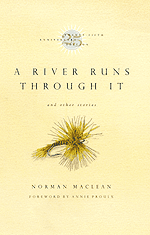 Did you know that Norman McLean's bestselling novella A River Runs Through It (part of the story collection of the same name) is published by the University of Chicago Press? I didn't until I saw a copy beautifully displayed in the office of a Chicago editor. McLean was an English professor at Chicago in the early 1930s, and he later earned a doctorate there. When Chicago published his book in 1976, it was the first work of fiction for that press, and it very nearly won the Pulitzer Prize (apparently there was some controversy over whether it was fictional enough). Most people have heard of it because of the 1992 movie directed by Robert Redford.
Chicago issued a special 25th-anniversary edition in 2001, and you can read about it here. Best of all for this charming story of a bestseller arising from the academy, author McLean published it -- his first book -- when he was 70 years old.
Monday, September 04, 2006
Authors Who Were Inspired in the University Classroom
 This is the first post of an occasional series focusing on bestselling or well-known authors who got their start in the university classroom. Our first author is bestseller Michael Connelly, author of The Lincoln Lawyer, currently #7 on the Publisher's Weekly Paperback Bestsellers list, with a good run in hardcover including spikes to #1. He has won the Quill, the Edgar, the Ian Fleming Steel Dagger, and many other awards. Here is what his web site says about his academic path: "Michael Connelly decided to become a writer after discovering the books of Raymond Chandler while attending the University of Florida. Once he decided on this direction he chose a major in journalism and a minor in creative writing — a curriculum in which one of his teachers was novelist Harry Crews."
Friday, March 03, 2006
Are You a Publishing Veteran?
Then heaven knows we need your input. If you have a distinguished publishing record -- especially multiple titles with the same press -- and some time to share your experience with others, let us know! We're establishing a network of on-campus experts to guide authors in the specifics of publishing with various presses.
Contribute Your Contracts
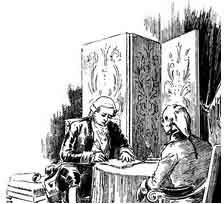 Please contribute copies of your literary contracts to our archive! The more actual contracts we can collect from various publishers, the better this office will be able to serve you by negotiating better and stronger deals over time.
Take a "Bookstore Ramble"
 Are you thinking about writing for a broader audience? A lively tour of a major bookstore (usually the Barnes & Noble on M Street) will help you figure out where your book might live on those crowded shelves. You'll get a sense of where your book belongs, and who its literary neighbors will be, plus how to get a better position. You'll learn little-known industry secrets of how books are acquired, sold, and tracked. You’ll even learn the answer to that mysterious question, "What is a typical bookstore's #1 product?" (Hint: It's definitely not books. In fact, it's not even an item! Or is that giving away too much?)
Why Academic Literary Advising Now?
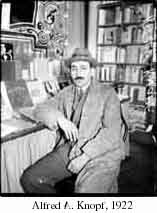 In many ways, scholarly publishing has changed. Some university presses are under increasing pressure to make money. They often do it in what seem like crazy ways (£100 cover price for a book? No image budget? Zero honoraria? Not enough promotion?). Meanwhile, the elite trade publishers like Knopf, FSG and Scribner are often playing by very different rules. We're here to help you figure out what's normal, what's out-of-bounds, and where your work might fit in this new publishing world.
Subscribe to:
Comments (Atom)